Small Batch Labels vs Mass Production Labels: Which Is Better for Startups?

When you are launching a new product, every decision feels high-stakes. But few choices carry as much financial and strategic weight as how you print your labels. Order too many labels upfront and you risk wasting cash on stock you cannot sell. Order too few and you might struggle to keep up with unexpected demand.
The choice between small batch labels and mass production labels is one of the most consequential decisions a startup will make. It affects your cash flow, your flexibility, your brand perception, and your ability to scale.
This guide breaks down the differences between small batch and mass production labels, helping you choose the right approach for your stage of business.
What Are Small Batch Labels?
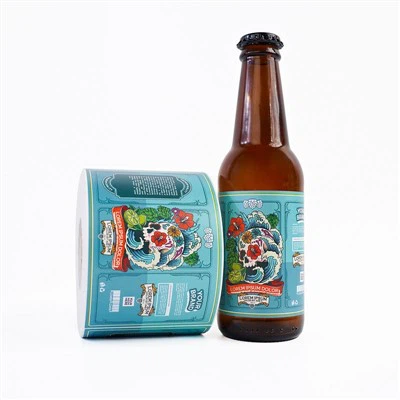
Small batch labels are exactly what they sound like: labels produced in small quantities, typically ranging from 10 to 5,000 units per design. They are made possible by digital printing technology, which requires no printing plates and has virtually no setup costs.
Key Characteristics of Small Batch Labels
- Low minimum order quantities: Many digital printers offer MOQs as low as 10, 25, or 50 labels
- No setup fees: Digital printing eliminates plate costs and setup charges
- Fast turnaround: Labels can be produced in days, not weeks
- Design flexibility: You can change artwork between runs with no penalty
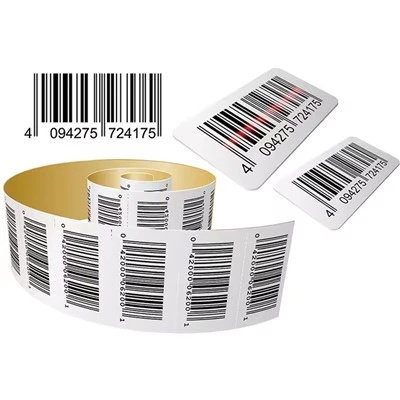
- Variable data capabilities: Each label can be different-serial numbers, QR codes, batch details, and more
- Higher per-unit cost: The unit price is higher than mass production because setup costs are spread across fewer labels
Common Users of Small Batch Labels
- Startups testing new products and markets
- Craft brands with limited production runs
- Seasonal and limited-edition products
- Brands with frequent design or ingredient changes
- Products with many SKUs and variants
What Are Mass Production Labels?
Mass production labels are produced in large quantities-typically 5,000, 10,000, or even 100,000 units per design. They rely on flexographic or offset printing technology, which uses physical printing plates and requires significant setup investment.
Key Characteristics of Mass Production Labels
- High minimum order quantities: Typically 5,000–25,000 labels per design
- High setup costs: Plates and setup can cost hundreds or thousands of dollars
- Longer lead times: Plates must be manufactured and presses set up
- Low per-unit cost: Once setup costs are covered, the unit price drops dramatically
- Consistent quality: Identical results across millions of impressions
- Premium finishes available: Foil, embossing, tactile coatings, and more
Common Users of Mass Production Labels
- Established brands with predictable demand
- Products with stable, unchanging artwork
- High-volume consumer goods
- Retail products sold through national chains
Head-to-Head Comparison
1. Cost Structure
This is where the two approaches differ most fundamentally.
Small batch labels have zero or very low setup costs but higher per-unit prices. Digital printing spreads costs evenly across each label because there are no plates to pay for. A run of 100 labels might cost around the same per label as 500 labels.
Mass production labels have high setup costs but very low per-unit prices. A full set of flexo plates can cost hundreds or thousands of dollars, but once those costs are covered, the per-label price drops significantly. A 100,000-label order might cost just 30–50% of the per-label price of a 1,000-label order.
| Order Size | Small Batch (Digital) | Mass Production (Flexo) |
|---|---|---|
| 100 labels | ~$0.50 per label | $2.00+ per label (with plate costs) |
| 10,000 labels | ~$0.30 per label | ~$0.08 per label |
The break-even point-where the total cost of small batch and mass production cross-typically falls somewhere between 2,000 and 25,000 labels per SKU, depending on setup costs, ink coverage, and complexity.
2. Financial Risk
Small batch labels carry low financial risk. You order what you need for your current production run-no more. If the product doesn't sell, you are not sitting on thousands of unused labels. If you need to change ingredients, pricing, or design, you can do so without wasting existing stock.
Mass production labels carry high financial risk. You must pay upfront for thousands of labels before you know if the product will sell. If demand is lower than expected, you are left with unusable inventory. If regulations change, you may have to discard perfectly good labels. As one industry expert puts it, "You shouldn't have to order 5,000 labels before you've sold your first 50 products".
3. Flexibility
Small batch labels offer maximum flexibility. You can change designs, update copy, correct ingredient lists, and reorder within days. You can print multiple product variants in one session. You can test different materials-gloss, matte, kraft-before committing to a larger run. You can even print variable data like serial numbers and QR codes on every single label.
Mass production labels are inflexible. Changing a design means making new plates-a costly and time-consuming process. This makes mass production inefficient for frequent updates, seasonal variations, or market testing. Once the plates are made and the labels are printed, you are locked into that design.
4. Cash Flow
Small batch labels protect cash flow. Instead of spending hundreds or thousands on a single label order, you can spend what you need for your current batch and reinvest the savings into stock, marketing, or better ingredients. Many digital printers offer orders starting from just 10 to 100 labels, making label printing accessible to even the smallest startups.
Mass production labels require significant upfront investment. Traditional printers quote 5,000, 10,000, or 25,000 units to bring the per-label price down. That money is tied up in label stock before you have sold a single product.
5. Quality and Professionalism
Small batch labels can look professional and polished. Digital printing technology has advanced significantly-modern digital presses produce high-quality results with vibrant colors and sharp detail. "Small brands should not need mass-production label quantities to look professional". However, digital printing may not offer the same range of specialty finishes-foil, embossing, tactile coatings-that mass production can provide.
Mass production labels offer the highest possible quality and the widest range of finishes. Flexographic and offset printing deliver superior color consistency, exact Pantone matching, and premium effects.
6. Sustainability and Waste
Small batch labels reduce waste. You print only what you need, when you need it. There is no leftover stock when designs change or products are discontinued. Many digital printers now offer eco-friendly materials and low-waste production processes.
Mass production labels generate more waste. Setup and registration can waste 8–12% of material. If demand is lower than expected, unused labels become waste. If designs change, existing stock becomes obsolete.
Frequently Asked Questions
Q1: Can I get professional‑quality labels in small batches?
Yes. Digital printing delivers sharp, vivid labels with low MOQ. No setup fees, you can achieve professional looks without large‑volume orders.
Q2: What is the minimum order quantity for small batch labels?
MOQ varies by supplier, starting at 10‑50 units per design, some with zero minimum, friendly for new startups.
Q3: Are small batch labels more expensive than mass production labels?
Unit price is higher for small runs, yet total spending is lower as you avoid excess inventory. Choose based on your actual demand instead of unit‑cost only.
Q4: When should I switch from small batch to mass production?
Move to mass production once demand is confirmed, design is finalized, and volume regularly hits the break‑even range of 2000‑25000 per SKU. Small‑batch printing preserves cash flow for early‑stage iteration.
Q5: Can I use the same artwork for both small batch and mass production?
Yes. Your digital files work for digital short‑run as well as flexo / offset mass production. When scaling up, existing designs can be adopted directly without redesign.