Custom Industrial UV-Printed Substrates & Components
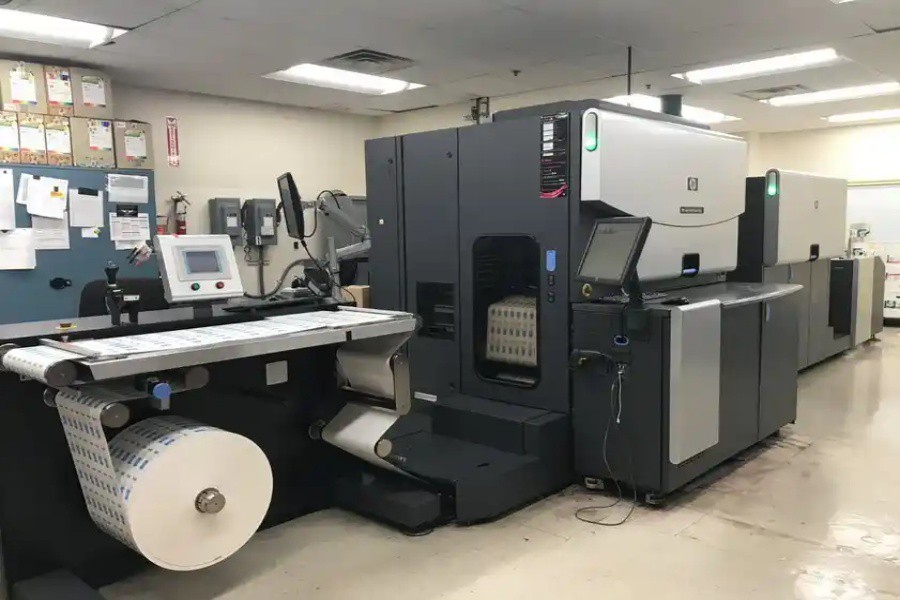
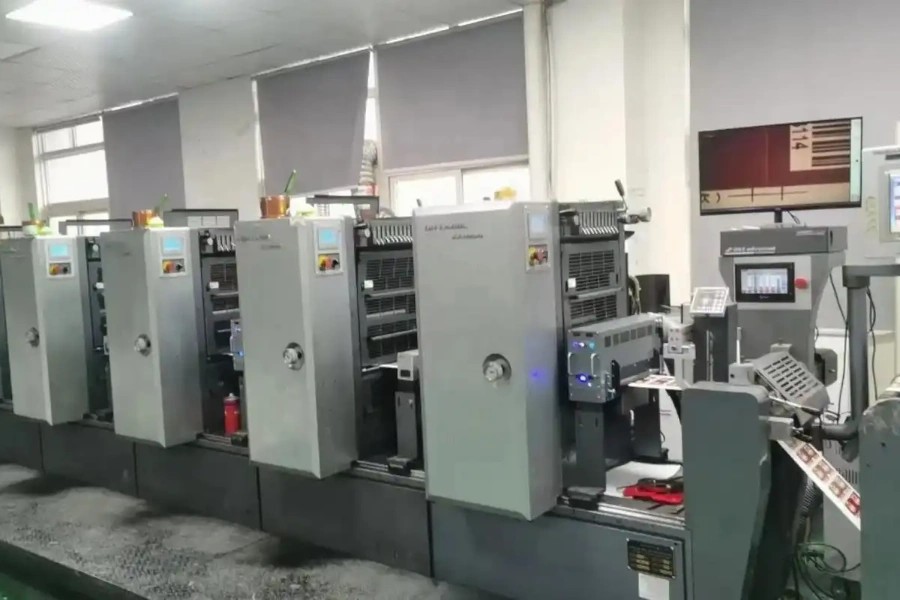
Direct-factory UV flatbed and roll-to-roll printing on rigid and flexible industrial substrates. We process metal nameplates, acrylic overlays, polycarbonate graphic panels, glass displays, and electronic enclosures using LED-cured UV inks engineered for mechanical adhesion, chemical resistance, and outdoor weatherability.
Precision Alignment Jigs: CNC-milled vacuum fixtures holding print-to-edge registration within ±0.1 mm.
High-Resolution Industrial Printheads: Powered by Ricoh Gen5/Gen6 and Konica Minolta heads jetted at up to 1440 DPI.
Color Consistency Standard: G7 color calibration with closed-loop spectrophotometer verification keeping Delta E < 1.5 across production batches.
Quality & Compliance Management: Manufactured under ISO 9001:2015 standards; all inks and primers comply with RoHS 3.0 and REACH regulations.
-
![UV Printed Paper Boxes]() UV Printed Paper BoxesUV Printed Paper Boxes are premium custom packaging solutions crafted from high-quality art paper, white cardboard and corrugated paper, finished with advanced UV direct printing technology.
UV Printed Paper BoxesUV Printed Paper Boxes are premium custom packaging solutions crafted from high-quality art paper, white cardboard and corrugated paper, finished with advanced UV direct printing technology. -
![UV Printed PVC Foam Board]() UV Printed PVC Foam BoardOur UV printed PVC foam boards (also known as Sintra boards) feature a premium closed-cell foam structure with a smooth, rigid outer surface. Adopting advanced UV direct printing technology, the
UV Printed PVC Foam BoardOur UV printed PVC foam boards (also known as Sintra boards) feature a premium closed-cell foam structure with a smooth, rigid outer surface. Adopting advanced UV direct printing technology, the -
![UV Printed Jigsaw Puzzle]() UV Printed Jigsaw PuzzleCured by UV light instantly, the ink layer features excellent scratch resistance, waterproof and fade-proof performance, ensuring vibrant colors and clear details for long-term use and display. Every
UV Printed Jigsaw PuzzleCured by UV light instantly, the ink layer features excellent scratch resistance, waterproof and fade-proof performance, ensuring vibrant colors and clear details for long-term use and display. Every -
![UV Printing Award Plaque]() UV Printing Award PlaqueCustom UV‑printed award plaques are personalized recognition trophies manufactured by UV flatbed direct printing. Available substrates include acrylic, crystal, wood, aluminum and stainless steel.
UV Printing Award PlaqueCustom UV‑printed award plaques are personalized recognition trophies manufactured by UV flatbed direct printing. Available substrates include acrylic, crystal, wood, aluminum and stainless steel. -
![UV Printed Luggage Tags]() UV Printed Luggage TagsCustom UV‑printed luggage tags and luggage shells deliver complete travel‑oriented customisation with UV flatbed digital printing technology.UV‑printed luggage tags are personalised travel
UV Printed Luggage TagsCustom UV‑printed luggage tags and luggage shells deliver complete travel‑oriented customisation with UV flatbed digital printing technology.UV‑printed luggage tags are personalised travel -
![Custom UV‑printed Casing]() Custom UV‑printed CasingCustom UV‑printed casings are personalized housing components processed by direct‑to‑surface UV flatbed digital printing. Compatible with plastic, PC, TPU, aluminum and other hard substrates, this
Custom UV‑printed CasingCustom UV‑printed casings are personalized housing components processed by direct‑to‑surface UV flatbed digital printing. Compatible with plastic, PC, TPU, aluminum and other hard substrates, this -
![UV Printed Keychains]() UV Printed KeychainsCustom UV‑printed keychains are personalized hanging accessories produced by direct UV flatbed printing. We support multiple base materials including acrylic, metal, wood, MDF and PVC. Different from
UV Printed KeychainsCustom UV‑printed keychains are personalized hanging accessories produced by direct UV flatbed printing. We support multiple base materials including acrylic, metal, wood, MDF and PVC. Different from -
![UV Printing Wood Nameplate]() UV Printing Wood NameplateUV‑printed wood nameplates are custom identification signs made by direct UV digital printing on solid wood, MDF or plywood substrates. Compared with laser engraving and thermal transfer, UV printing
UV Printing Wood NameplateUV‑printed wood nameplates are custom identification signs made by direct UV digital printing on solid wood, MDF or plywood substrates. Compared with laser engraving and thermal transfer, UV printing -
![UV Printing Metal Nameplate]() UV Printing Metal NameplateUV printed metal nameplates are premium identification plates crafted by direct digital UV printing on aluminum, stainless steel and other metal substrates. Unlike traditional screen printing or
UV Printing Metal NameplateUV printed metal nameplates are premium identification plates crafted by direct digital UV printing on aluminum, stainless steel and other metal substrates. Unlike traditional screen printing or -
![UV Printing Coaster]() UV Printing Coastercustom UV‑printed coasters adopt direct UV printing on acrylic, ceramic, wood or cork substrates. High‑definition full‑color output delivers sharp patterns and vivid color performance. UV‑cured ink
UV Printing Coastercustom UV‑printed coasters adopt direct UV printing on acrylic, ceramic, wood or cork substrates. High‑definition full‑color output delivers sharp patterns and vivid color performance. UV‑cured ink -
![UV Printing Acrylic Wall Art]() UV Printing Acrylic Wall ArtWe use direct UV flatbed printing on premium clear cast acrylic sheets. High‑resolution output brings sharp details and vibrant, true‑to‑life colors.UV‑cured ink adheres firmly to the surface,
UV Printing Acrylic Wall ArtWe use direct UV flatbed printing on premium clear cast acrylic sheets. High‑resolution output brings sharp details and vibrant, true‑to‑life colors.UV‑cured ink adheres firmly to the surface, -
![UV Printing Acrylic Photo Block]() UV Printing Acrylic Photo BlockCustom UV‑printed acrylic photo blocks feature direct surface UV printing on premium clear acrylic. It produces vivid, scratch‑resistant photo‑grade images. Custom photos, logos and patterns are
UV Printing Acrylic Photo BlockCustom UV‑printed acrylic photo blocks feature direct surface UV printing on premium clear acrylic. It produces vivid, scratch‑resistant photo‑grade images. Custom photos, logos and patterns are


Manufacturing & Quality Control Process
Substrate Dyne & Surface Testing:
Surface energy is measured using dyne pens prior to ink jetting to guarantee primer activation and ink wetting.
Automated Vision Inspection:
Inline high-resolution CCD cameras monitor the moving print bed to detect missing nozzles, banding lines, dust spots, or color variations in real time.
Destructive & Non-Destructive Batch Testing:
Retained sample pieces from each production lot undergo cross-hatch tape pull tests (ASTM D3359) and solvent rub tests after a full 24-hour UV cure cycle.
Color Calibration Auditing:
Color output is periodically measured using X-Rite spectrophotometers to ensure spectral values stay within Delta E < 1.5 tolerances compared to master proofs.
Substrate Compatibility & Surface Pre-Treatment
|
Substrate Material |
Pre-Treatment Method |
Surface Dyne Target |
Typical Industrial Applications |
|
Anodized Aluminum & Stainless Steel |
Isopropyl alcohol cleaning + silane chemical primer |
>48 dynes/cm |
Industrial rating plates, equipment nameplates, outdoor tags |
|
Acrylic (PMMA) & Polycarbonate (PC) |
Flame treatment or automated corona activation |
>44 dynes/cm |
Architectural signage, backlit graphic overlays, control panels |
|
Tempered Glass & Ceramics |
Isopropyl alcohol cleaning + hydrophobic nano-primer |
>50 dynes/cm |
Touchscreen displays, smart home glass interfaces, medical monitors |
|
Flexible PET / TPU / Vinyl Films |
Flexible ink formulation + plasma conditioning |
>42 dynes/cm |
Membrane switches, flexible overlays, protective device skins |
Technical Specifications
|
Parameter / Feature |
Engineering Specification |
Test Standard / Method |
|
Print Resolution |
720 × 900 DPI to 1440 × 1440 DPI |
Internal Optical Gauge |
|
Drop Volume |
Variable drop technology: 3.5–28 pL |
Optical Drop Measurement |
|
Cross-Hatch Adhesion |
Class 4B–5B on pre-treated substrates |
ASTM D3359 Tape Test |
|
Surface Hardness |
2H–4H with hard clear-coat formulation |
ASTM D3363 Pencil Hardness |
|
Solvent / Chemical Resistance |
>100 double rubs with MEK / Isopropyl Alcohol |
ASTM D5402 MEK Rub Test |
|
Color Accuracy |
ΔE < 1.5 against Pantone / ISO 12647-2 |
X-Rite Spectrophotometer |
|
Maximum Rigid Substrate Thickness |
Up to 100 mm (4.0") |
Calibrated Height Gauge |
|
Registration Tolerance |
±0.1 mm print-to-cut alignment on CNC panels |
Optical CCD Camera System |
Packaging, Compliance & Logistics
Surface Protection:
Printed faces receive low-residue PE protective film or non-abrasive foam interleaving sheets between stacked parts.
Environmental Moisture Control:
Moisture-sensitive metal, glass, and electronic overlays are sealed in PE bags with silica gel desiccants.
Export Container Standards:
Cartons are column-stacked on ISPM 15 heat-treated wooden or plastic pallets, reinforced with heavy-duty edge boards, stretch-wrapped, and strapped.
Regulatory Compliance:
Full RoHS 3.0, REACH, and SDS (Safety Data Sheets) documentation supplied with every export shipment upon request.
Commercial Terms & Lead Times
Prototype & Sampling:
3 to 5 business days (including custom CNC jig setup).
Minimum Order Quantity (MOQ):
Low MOQ flexible options starting from 100 pcs for custom industrial nameplates/enclosures; scalable capacity for 100,000+ unit production runs.

Mass Production Lead Time:
7 to 12 business days (depending on volume and secondary processing requirements).
CAD & Artwork Requirements:
Vector files preferred (.AI, .EPS, .PDF, .DXF, or .STEP for 3D enclosures).
FAQ
Huizhou Yufeng New Materials Co., Ltd. is one of the most experienced uv‑printed products manufacturers and suppliers in China, featured by quality products and good price. Please feel free to wholesale durable uv‑printed products for sale here and get pricelist from our factory. We also accept customized orders.
Popular Products