RFID Labels: Your New Assistant for Cross-border Logistics
If you run a business that ships products across borders, you know the pain. Packages get lost. Customs clearance takes forever. You have no idea where your goods are until they arrive-or worse, until they don't. RFID labels are changing that. These small tags are becoming an essential tool for cross-border logistics, helping businesses track shipments in real time, speed up customs, and cut losses. This guide will help you understand what RFID labels are, how they work, and how to choose the right ones for your cross-border shipping needs.
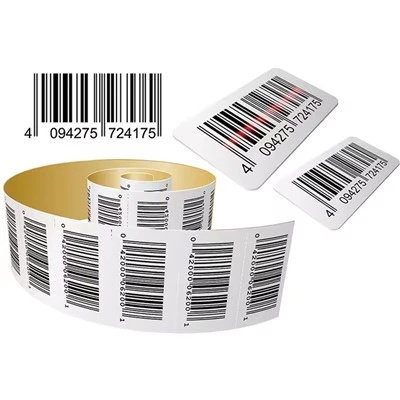
Additionally, should you have any requirements for QR code and barcode labels, kindly get in touch with us.
What Are RFID Labels and How Do They Work?
The Basics of RFID Technology
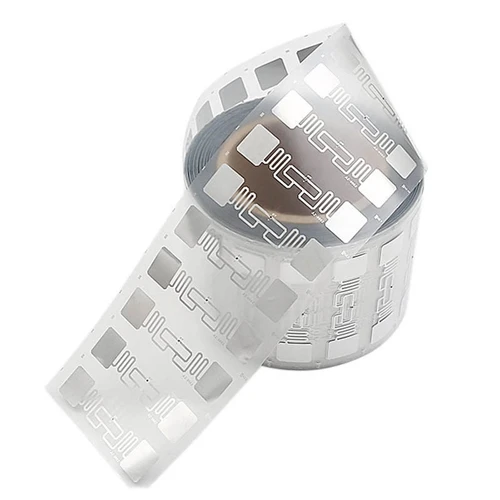
RFID stands for Radio Frequency Identification. Unlike barcodes that need to be scanned one by one, RFID tags use radio waves to communicate with a reader. Each tag contains a tiny chip and an antenna. When the tag enters the reader's electromagnetic field, it sends back a unique identification code-like a digital ID card for your package.
Active vs. Passive Tags
RFID tags come in two main types. Active tags have their own battery and can transmit signals over longer distances. Passive tags have no battery-they get power from the reader's signal. For most cross-border logistics, passive UHF tags are the standard because they are cheaper and still offer impressive read ranges.
Why RFID Beats Barcodes for Cross-border Shipping
Barcodes require line-of-sight scanning. Someone has to physically point a scanner at each label. RFID does not. A reader can capture hundreds of tags in seconds, even inside sealed boxes or stacked pallets. In cross-border logistics, this difference is huge. For example, a cargo container with 100 packages might take 30 minutes to scan with barcodes. With UHF RFID, it takes less than 10 seconds.
The Real Benefits of RFID in Cross-border Logistics
Real-time Tracking Across Borders
When you attach an RFID label to every shipment, you can track it at every stage: factory departure, port loading, customs inspection, and final delivery. This visibility helps you respond quickly to delays and gives your customers accurate delivery updates.
Faster Customs Clearance
RFID makes customs processes faster. Accurate manifests help customs officials quickly verify that the correct number of containers has arrived. In one documented case, UHF RFID reduced single-container clearance time from 8 minutes to 45 seconds. Faster clearance means lower storage fees and fewer delays.
Reducing Loss and Theft
Cross-border shipments face high risks of loss and theft. Industry data shows that without effective tracking, abnormal shipment rates can exceed 5%. RFID helps you identify exactly where a problem occurred. Some anti-theft RFID tags even self-destruct when removed, preventing replacement fraud.
How to Choose the Right RFID Labels
Step 1: Determine Your Frequency Needs
UHF RFID operates in the 860–960 MHz band and is the standard for logistics. However, different regions use different sub-bands. The U.S. uses 902–928 MHz, while Europe uses 865–868 MHz. If you ship to multiple countries, make sure your tags and readers support the required frequency ranges.
Step 2: Match the Tag to Your Packaging
Standard UHF tags work well on cardboard boxes and shipping bags. But if you ship metal products or liquids, standard tags will fail-read rates can drop by 70%. You need specialty tags with an anti-metal spacer or tags designed for liquid environments.
Step 3: Check Standards and Compatibility
Your RFID tags should comply with ISO/IEC 18000-6C (also known as EPC Gen2). This standard ensures that tags from different manufacturers work with different readers. Before large orders, test your tags with your existing readers and software.
Step 4: Consider Cost vs. Value
As of late 2025, passive UHF RFID inlays cost about $0.045 to $0.085 per unit at very high volumes. For smaller orders, retail prices range from $0.18 to $0.65. But the tag price is only part of the story. You also need readers, printers, and software. Organizations processing 10,000+ items daily typically see positive ROI within 12–24 months through labor savings and loss reduction.
The Bottom Line
RFID labels are not just a technology upgrade-they are a practical solution to real cross-border logistics problems. They cut clearance times, reduce losses, and give you visibility you cannot get with barcodes. Start with a small pilot, test your tags in real conditions, and scale up when you see results. Your logistics operation will thank you.
FAQ
Q1: How much do RFID labels cost for cross-border shipping?
A: Passive UHF RFID labels cost roughly $0.045 to $0.085 per unit at very high volumes (10 million+), and $0.18 to $0.65 for smaller orders. You also need to budget for readers ($1,200–$3,500 each) and software.
Q2: Can RFID tags work on metal or liquid products?
A: Standard RFID tags fail on metal and liquids. You need specialty tags with anti-metal spacers or tags designed for liquid environments. These cost more-often $0.50 to $15 per tag.
Q3: What frequency should I choose for international shipping?
A: UHF (860–960 MHz) is the standard for logistics. The U.S. uses 902–928 MHz and Europe uses 865–868 MHz. Choose tags and readers that support the regions you ship to.
Q4: Do I need to replace my barcode system entirely?
A: No. Many businesses use both. RFID handles bulk tracking and real-time visibility, while barcodes remain useful for simple, low-cost labeling. You can run them side by side.
Q5: How long does it take to see ROI from RFID?
A: Organizations processing 10,000+ items daily typically see positive ROI within 12–24 months, mainly through 60–80% labor savings in inventory management and reduced shipment losses.
Q6: What standards should my RFID tags comply with?
A: Look for ISO/IEC 18000-6C (EPC Gen2) compliance. This ensures compatibility with readers from different manufacturers and is the global standard for logistics applications.