Custom Die-Cuts, Window Cutouts & Foil Stamping: Make Your Label Pop

Walk down any store aisle. Most labels look the same: a rectangle, some text, a logo. Then one catches your eye. Maybe it has an unusual shape. Maybe you can see the product through a clear window. Maybe the brand name shines in gold. That label is using one of three powerful techniques: custom die-cuts, window cutouts, or foil stamping. This guide will help you compare, choose, and buy these label features wisely.
What These Three Techniques Actually Do
Custom Die-Cuts
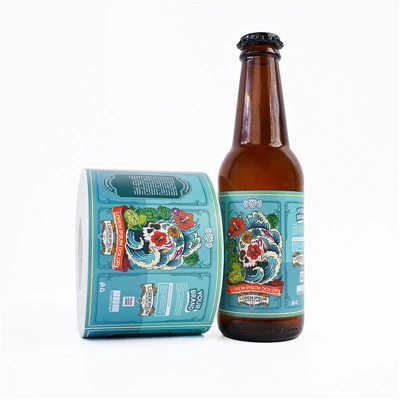
A custom die-cut is a label cut into a shape that is not a standard rectangle or circle. It could be a leaf, a bottle outline, a mascot, or any shape that matches your brand. A steel rule die is made to cut that exact shape. Custom die-cut labels stand out because the shape itself becomes part of the design.
Window Cutouts
A window cutout is a hole or clear area in the label. It lets the customer see the product inside-coffee beans, jam, cookies, or lotion. Window cutout labels add honesty and shelf appeal. They say, "Look at what you are buying." They work best when the product itself looks good.
Foil Stamping
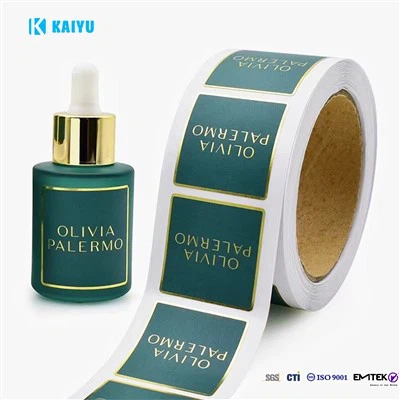
Foil stamping uses heat and pressure to press a thin metallic foil onto the label. The result is a shiny, reflective accent in gold, silver, copper, or other colors. Foil stamped labels feel premium. They are common on wine, spirits, chocolate, cosmetics, and gift products. The shine catches light and draws the eye.
How to Choose the Right Technique for Your Product
Match the Technique to Your Product Category
Food and beverage: Window cutouts work well for jars and boxes. Foil stamping suits premium coffee, tea, and chocolate.
Cosmetics and skincare: Custom die-cuts and foil stamping create a high-end feel. Window cutouts can show product color or texture.
Wine and spirits: Foil stamping is almost expected on premium bottles. Custom die-cuts can shape the label around the bottle.
Retail and e-commerce: Custom shapes help unboxing content stand out. Keep the die simple to control cost.
Match the Technique to Your Label Material
Not every technique works on every material. Foil stamping adheres better to smooth, coated papers and films. On textured or recycled stocks, foil may look uneven. Window cutouts require a material that cuts cleanly, such as BOPP or PET film. Custom die-cuts work on most materials, but thick or rigid stocks may crack at sharp corners.
Match the Technique to Your Budget and Quantity
All three techniques add cost. A custom die costs about $300–$500 as a one-time setup fee. Foil stamping adds a setup charge plus a per-label foil cost. Window cutouts require a die too. For small runs, digital printing with simple die-cuts is often the practical choice. For large runs, flexographic printing brings per-unit costs down.
Design Rules for Shelf Impact
Keep the Shape Simple
The best custom die-cut labels are easy to recognize. A complex shape with thin points may tear or cost more to produce. Simple silhouettes often have more shelf power than busy outlines.
Use Window Cutouts with Purpose
A window should reveal something interesting. If the product inside is messy or dull, a window may hurt sales. Also check that the window does not cover required information like net weight, ingredients, or barcodes.
Use Foil Sparingly
Foil works best as an accent. A gold logo, a thin border, or a small icon can lift the whole label. Covering the entire label in foil can look cheap and make text hard to read. Also avoid placing foil behind barcodes-it can confuse scanners.
Cost and Production Realities
Setup Costs
Custom die-cut labels and window cutout labels both require a die. Foil stamped labels require a stamping die. These are one-time costs, but they matter for small orders. Ask your printer whether the die can be reused for future orders.
Printing Method
Digital printing is flexible and has low setup costs. It is good for short runs and frequent design changes. Flexographic printing has higher setup costs but lower per-unit costs at volume. Foil stamping can be added to both methods, but it is usually a separate production step.
Proofing Is Essential
Always ask for a physical proof. Check the die shape, the window position, and the foil color. A digital proof cannot show how foil reflects light or how a die cuts. A physical proof prevents expensive surprises.
Common Mistakes to Avoid
Choosing a shape that is too complex for the label size.
Putting a window where it hides important legal text.
Using foil on every element so nothing stands out.
Forgetting that foil can block barcode scanning.
Skipping a physical proof before a full print run.
Ordering a custom die before testing the design on a real product.
Questions to Ask Your Printer
What is the die setup fee, and can I reuse the die later?
Which materials work best with my chosen technique?
How will foil stamping affect barcode scanning?
Can I see a physical proof before the full run?
What is the minimum order quantity for these features?
How much extra time does foil stamping add to production?
FAQ
Q1: What is a custom die-cut label?
A: It is a label cut into a custom shape instead of a standard rectangle or circle. A steel rule die is made to cut that shape. Custom die-cut labels help a product stand out on the shelf.
Q2: Are window cutouts safe for food labels?
A: Yes, if the window does not expose the food to contamination and does not cover required information. The material around the window must still protect the product. Check local food labeling rules before printing.
Q3: Does foil stamping work on all label materials?
A: No. Foil adheres best to smooth, coated papers and films. On rough or textured materials, foil may look uneven or fail to stick properly. Always test before a full run.
Q4: How much do these label techniques cost?
A: A custom die usually costs about $300–$500 as a one-time fee. Foil stamping adds a setup charge plus per-label foil cost. Window cutouts also require a die. Per-unit costs depend on quantity, material, and printing method.
Q5: Can I combine all three techniques on one label?
A: Yes. Many premium labels use a custom shape, a window, and foil accents together. But each technique adds cost and production steps. Combine them only when the design truly needs them.
Q6: Will foil stamping stop my barcode from scanning?
A: It can. Metallic foil reflects light and can confuse scanners. Keep foil away from the barcode area, and always test the final label with a real scanner.