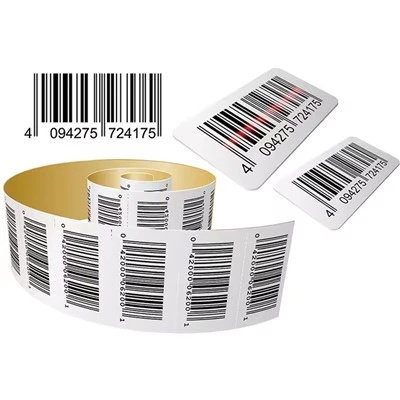
Is Your Thermal Label Leaking BPA? Why PP Film is the Safe Alternative
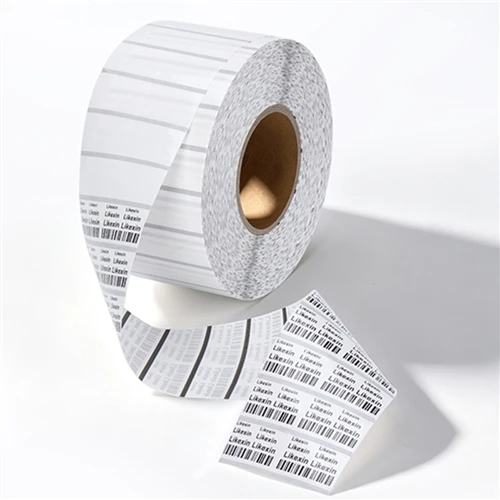
A thermal label seems harmless. You print on it, stick it on a package, and move on. But the chemistry inside that label has been the subject of regulatory action, health research, and a quiet industry shift that most buyers never see.
The concern centers on bisphenol A (BPA), a chemical historically used as a color developer in thermal paper. BPA is an endocrine disruptor. It can migrate out of the paper and into the environment-or through the skin of anyone handling it. For a warehouse worker peeling labels all day, or a consumer holding a receipt, that exposure adds up.
This is why the market is moving toward BPA-free and phenol-free thermal labels, and why PP (polypropylene) film has become a practical alternative for applications where safety and durability both matter.
The BPA Problem: What Thermal Labels Have Been Hiding
Why BPA Was Used in Thermal Paper
Direct thermal paper creates an image by heating a coating that contains a dye and a color developer. BPA was an excellent color developer: cheap, effective, and reliable. That is why it became the standard in receipts, labels, and tickets for decades.
The Regulatory Response
The European Union restricted BPA in thermal paper under REACH. Since January 2, 2020, thermal paper containing BPA at a concentration equal to or greater than 0.02% by weight cannot be placed on the EU market. This was not a voluntary industry guideline. It was a legal restriction driven by health concerns.
In the United States, the regulatory path has been different but the direction is the same. California's Proposition 65 added bisphenol S (BPS), a common BPA substitute, to its list of chemicals known to cause reproductive toxicity, effective December 29, 2023. Businesses selling products containing BPS in California must provide warnings. Washington State's Safer Products regulation further restricts phenols in thermal products starting January 1, 2026.
The message is clear: phenol-based thermal chemistry is being squeezed out of the market, one regulation at a time.
The Substitution Trap
When BPA was restricted, many manufacturers switched to BPS. BPS is structurally similar to BPA and carries similar concerns. The shift from BPA to BPS was not a solution; it was a substitution. A label that is "BPA-free" but still contains BPS has not solved the underlying problem.
This is why the more meaningful specification is phenol-free, not merely BPA-free.
Why PP Film Is the Safer Alternative
No BPA, No BPS, No Phenol Chemistry
Polypropylene is a polyolefin. It does not contain BPA in its molecular structure, and it does not require BPA or any phenol-based compound as an additive or color developer. When a thermal label uses a PP film face stock with a phenol-free thermal coating, the BPA exposure pathway is eliminated at the material level.
This is not a claim that requires a special certification to be true. It is a property of the polymer. PP is inherently BPA-free.
Heat Resistance and Durability
PP film offers practical advantages beyond chemical safety. Polypropylene has a melting point between 160–180°C, which means it withstands hot-fill applications and elevated storage temperatures without softening or releasing chemicals. For a thermal label on a product that gets warm-a takeout container, a logistics package sitting in a truck, an industrial component-this heat tolerance matters.
PP film is also water-resistant and tear-resistant. A paper thermal label exposed to moisture can wrinkle, delaminate, or lose print legibility. A PP film label holds up.
Phenol-Free Thermal Coatings on PP Film
The thermal coating is separate from the film. A PP film can be paired with a phenol-free thermal coating to create a label that is both chemically safe and physically durable. Chinese manufacturers now offer phenol-free thermal films using BOPP as the substrate, with coating formulations that avoid BPA and BPS entirely.
These products are designed for applications that require compliance with ROHS 2.0 and REACH, and they offer print performance comparable to conventional thermal products-sharp images, good scratch resistance, and resistance to water, oil, and plasticizers.
What to Specify When Buying Phenol-Free Thermal Labels
Step 1: Ask for "Phenol-Free," Not Just "BPA-Free"
BPA-free is a minimum. Phenol-free is the real specification. A supplier that cannot confirm the absence of BPS and other phenol-based developers is not providing a complete answer.
Step 2: Confirm the Face Material
Paper thermal labels can be phenol-free, but they remain vulnerable to moisture, tearing, and environmental degradation. PP film labels offer the same phenol-free chemistry with better physical durability. For applications where the label must survive handling, moisture, or heat, PP film is the appropriate choice.
Step 3: Check Regulatory Compliance for Your Market
If you sell in the EU, confirm compliance with REACH restrictions on BPA in thermal paper. If you sell in California, confirm compliance with Prop 65 requirements for BPS. If you sell in Washington State, confirm compliance with the Safer Products regulation taking effect in 2026. A phenol-free label simplifies compliance across all three.
Step 4: Test Print Quality and Durability
Phenol-free thermal coatings have improved significantly, but performance still varies. Request samples and test them on your actual printer. Check barcode readability, scratch resistance, and performance after exposure to water or heat. A production factory with experience in phenol-free thermal film can recommend the right coating for your application.
Step 5: Plan for Custom and OEM Consistency
A phenol-free thermal label is often a custom construction: specific dimensions, adhesive for the surface, and print requirements. For brands using an OEM model, the specification must travel clearly to the manufacturing partner. The "phenol-free" claim must be verifiable at the batch level. A custom label is only as safe as the factory's commitment to holding that chemistry consistent across every production run.
FAQ
Q1: What is BPA and why is it in thermal labels?
A: BPA (bisphenol A) is a chemical historically used as a color developer in thermal paper. When heated, it reacts with a dye to form the printed image. It is an endocrine disruptor, and the EU restricted its use in thermal paper from January 2020.
Q2: Is BPS a safe substitute for BPA?
A: BPS is structurally similar to BPA and has been added to California's Prop 65 list as a reproductive toxicant. It is a substitution, not a solution. The more meaningful specification is phenol-free, which excludes both BPA and BPS.
Q3: Does PP film contain BPA?
A: No. Polypropylene is a polyolefin that does not contain BPA in its molecular structure. It does not require BPA or phenol-based additives. A PP film label with a phenol-free thermal coating eliminates the BPA exposure pathway at the material level.
Q4: Is PP film safe for food-contact thermal labels?
A: PP is widely used in food-contact applications, including microwaveable containers and food storage products. Pure PP shows minimal leaching at cool temperatures, and its high melting point makes it suitable for hot-fill and warm-food applications. For food-contact thermal labels, confirm that the full construction-including the thermal coating and adhesive-meets the relevant food-contact regulations in your market.
Q5: Can a phenol-free thermal label perform as well as a conventional one?
A: Yes, in most applications. Phenol-free thermal coatings have improved significantly. They offer comparable print quality, barcode readability, and resistance to water, heat, and abrasion. Performance varies by supplier, so testing on your actual printer and application is essential.