Don't Let Your Label Become Fuel: Why Flame-Retardant Labels Matter
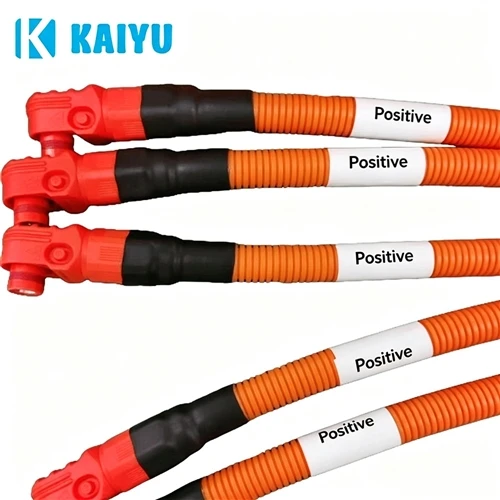
A standard label looks harmless. It is thin, printed, and adhesive-backed. In normal conditions, it does exactly what it is supposed to do. But put that same label near a heat source, a short circuit, or a thermal event, and its behavior changes completely. Ordinary label materials can ignite, melt, and drip flaming particles onto the components below. In a confined space like a battery pack or a control panel, a single burning droplet can turn a small fault into a serious fire.
Flame-retardant labels exist because the label itself can become part of the fire problem. They are not ordinary labels with a warning printed on them. They are engineered materials designed to resist ignition, stop the flame from spreading, and keep critical information legible even after thermal exposure.
Why Standard Labels Fail Where It Matters
The Label Is Fuel
Standard labeling materials-paper, standard PET, standard adhesives-are not designed to withstand thermal events. When exposed to fire or intense heat, they can ignite, produce toxic smoke, melt, or simply become illegible. In applications where traceability and safety information are mission-critical-lithium-ion battery packs, aerospace wiring harnesses, automotive engine compartments, industrial control panels-that failure is not a cosmetic problem. It is a safety problem.
The Dripping Problem
A material that burns is dangerous. A material that burns and drips is worse. Flaming drips can ignite nearby materials and spread fire to components that were not originally involved. This is why the highest flame-retardant ratings require not only that the material self-extinguishes, but that it produces no flaming drips capable of igniting cotton beneath the test specimen.
How Flame-Retardant Labels Work: The Standards That Define Performance
UL 94: The Core Material Standard
UL 94 is the most widely recognized standard for evaluating how plastic and synthetic materials behave when exposed to flame. It is not a single test. It has different methods depending on the material's thickness and rigidity.
For rigid materials, the relevant rating is UL 94 V-0. For thin, flexible materials like labels and films, the relevant rating is UL 94 VTM-0 (Very Thin Material). VTM-0 is the highest rating in the thin-material category.
To earn VTM-0, a material must pass a strict set of criteria: single flame combustion time under 10 seconds, total combustion time under 50 seconds across five specimens, no flaming drips that ignite cotton, and no flame spread beyond a specific marker line. A label that meets these thresholds is genuinely flame retardant. A label that does not is not.
UL 969: The Label-Specific Standard
UL 94 evaluates the material. UL 969 evaluates the finished label. It tests the complete construction-facestock, adhesive, and printing-under real-world conditions including temperature cycling, humidity, chemical exposure, and UV durability. When sourcing flame-retardant labels for critical applications, look for both UL 94 VTM-0 (or V-0) and UL 969 recognition. The first confirms the material is flame retardant. The second confirms the label as a whole will perform.
Industry-Specific Standards
Different industries add their own requirements. For automotive applications, FMVSS 302 (with ISO 3795 as the global equivalent) governs the flammability of interior materials. For aerospace, smoke density and toxicity standards such as BSS 7238 and BSS 7239 are often required in addition to flame resistance. For electronic equipment, IEC 60332 applies to cables and connectors.
A label described as "flame retardant" without a reference to a specific standard is essentially unverifiable. Independent certification provides the common benchmark that buyers and regulators can rely on.
The Applications Where Flame-Retardant Labels Are Essential
Electric Vehicle Batteries
The EV battery is one of the most demanding environments for any label. A battery pack carries warning labels, traceability labels, and identification labels in close proximity to cells that can experience thermal runaway. The 2025 version of China's GB 38031 standard raises the safety requirement for battery thermal runaway from "five minutes of escape time" to "no fire, no explosion," which pushes flame-retardant materials into a more critical role.
Avery Dennison's work with EV battery OEMs illustrates the requirement set. The labels must achieve flame retardancy at UL 94 VTM-0 to VTM-2, ESD performance to avoid generating sparks near batteries, higher dielectric strength, and resistance to aggressive chemicals including acetone-while remaining printable for traceability.
Electronics and Control Panels
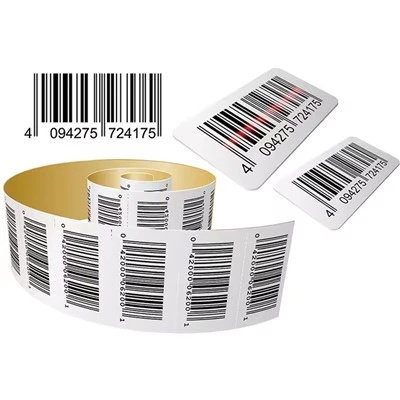
Inside a server rack, a control panel, or a power supply, space is tight and components are packed closely. A label that ignites and drips in that environment can destroy more than the component it is attached to. Polyonics has developed non-halogen flame-resistant labels specifically for miniature, high-power electronics, with barcode labels rated for continuous use up to 700°C in certain constructions.
Automotive and Wiring Harnesses
Engine compartments and wiring harnesses expose labels to heat, oil, fuel, and vibration. Flame-retardant labels for these applications are specified with temperature resistance from -40°C to 150°C, resistance to oils, fuels, coolants, and brake fluid, and compliance with automotive standards including FMVSS 302 and OEM specifications such as VW80101 and LV312.
Choosing the Right Flame-Retardant Label
Step 1: Confirm the Standard, Not the Claim
Ask for the UL 94 rating (VTM-0 or V-0) and the UL 969 recognition. Ask which industry-specific standards the label has been tested against. A supplier who cannot provide third-party test reports is not providing a verifiable product.
Step 2: Match the Material to the Temperature and Environment
Polyimide (PI) is the preferred choice for extreme temperatures and thin-film applications, but it costs more. FR-PET is a lower-cost alternative for general-purpose flame-retardant needs, but it may have thickness limitations and different mechanical properties. The right choice depends on the actual temperature range, the available space, and the required durability.
Step 3: Check the Full Construction
A flame-retardant face stock on a standard adhesive is not a fully flame-retardant label. The adhesive and any coating also contribute to the label's behavior in a fire. Avery Dennison describes a "full-structure flame-retardant" approach, with both the face material and the adhesive designed for flame resistance. Ask whether the entire construction meets the standard, not just one layer.
Step 4: Expect a Cost Premium-and Understand What It Buys
Flame-retardant labels cost more than standard labels. Industry data indicates that specially flame-retardant-treated materials can cost 3–8 times more than ordinary labels, and battery labels can carry a premium of 3–10 times depending on the material and rating. The premium is not for decoration. It buys a material that self-extinguishes, produces no flaming drips, and maintains legibility after thermal exposure. In a battery pack or a control panel, that difference is the difference between a contained fault and a spreading fire.
Step 5: Plan for Custom and OEM Consistency
Flame-retardant labels for electronics and EV batteries are rarely off-the-shelf products. Sizes are small, barcodes are serialized, and the adhesive must match the surface and the temperature range. A production factory with experience in flame-retardant materials can convert the correct face stock with the right adhesive and printing method for your application.
For brands using an OEM model, the specification must travel clearly to the manufacturing partner: the flame rating, the industry standard, the temperature range, the chemical exposure, and the printing requirements. Batch consistency matters as much as the sample. A custom flame-retardant label is only as reliable as the factory's ability to hold the same flame-retardant chemistry and construction across every production lot.
FAQ
Q1: What is the difference between UL 94 V-0 and VTM-0?
A: V-0 is the highest flame-retardant rating for rigid materials. VTM-0 is the highest rating for thin, flexible materials like labels and films. Labels are thin, so VTM-0 is the appropriate rating to look for on a flame-retardant label.
Q2: What does a VTM-0 rating actually prove?
A: It proves that the material self-extinguishes within 10 seconds of flame removal, that the total combustion time across five specimens is under 50 seconds, that it produces no flaming drips capable of igniting cotton, and that the flame does not spread beyond a specified marker line.
Q3: Why is UL 969 important if the material already has UL 94?
A: UL 94 tests the material. UL 969 tests the finished label, including the adhesive and printing, under conditions like temperature cycling, humidity, and chemical exposure. For critical applications, both ratings confirm that the label as a whole will perform, not just the raw material.
Q4: Can a standard label be treated to become flame retardant?
A: A surface treatment alone is not sufficient. Effective flame retardancy requires the entire construction-face stock, adhesive, and any coating-to be formulated for flame resistance. A standard adhesive on a flame-retardant face stock can still fail the test because the adhesive contributes to the burning behavior.
Q5: Where are flame-retardant labels most critical?
A: EV battery packs, electronic control panels, power supplies, automotive engine compartments, wiring harnesses, and aerospace interiors-anywhere a label is close to heat sources or electrical faults, and where a burning drip could spread fire to nearby components.