Custom Labels vs Standard Labels: Which Is More Cost-Effective?

When you are launching a product or scaling your business, few decisions feel as deceptively simple-and as consequential-as choosing your labels. On one side, you have standard labels: pre-made, mass-produced, and ready to go. On the other, custom labels: designed specifically for your brand, your product, and your packaging.
The natural assumption is that standard labels are cheaper. And at first glance, that is often true. But cost-effectiveness is not the same as lowest price. It is about value-what you get for what you pay, and what the label costs your operation over time.
This guide breaks down the real cost comparison between custom labels and standard labels, helping you decide which is more cost-effective for your business.
What Are Standard Labels?
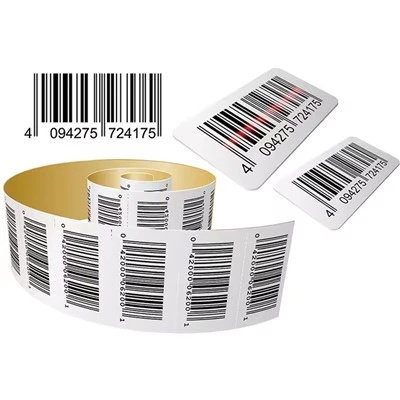
Standard labels-also called stock labels-are pre-designed, mass-produced labels available in fixed shapes, sizes, materials, and adhesive types. They come in standard formats like rectangles, squares, circles, and ovals. They are designed to work across a wide range of applications, but not specifically tailored to yours.
Standard labels are often blank or pre-printed with generic designs, ready to be printed on demand using in-house or outsourced printing. They are the label equivalent of off-the-shelf clothing-functional, affordable, and available immediately.
Common Uses for Standard Labels
Barcode stickers and shipping labels
Internal inventory tracking
Price tags and product labels
Office and administrative labeling
Short-term promotions and seasonal items
Products with basic labeling needs
What Are Custom Labels?
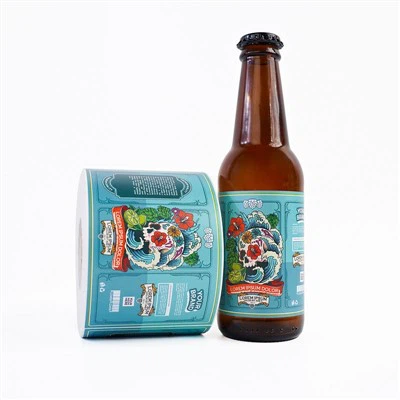
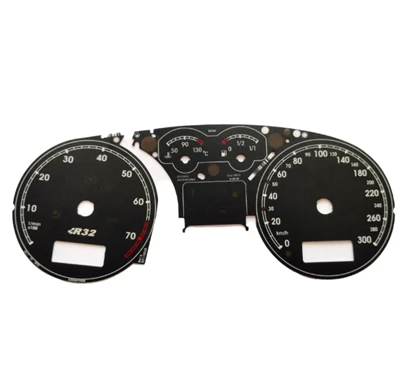
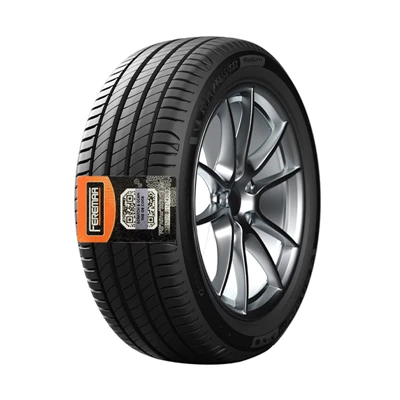
Custom labels are created to match your brand's unique specifications. This includes custom shapes, sizes, materials, adhesives, finishes, and print designs. Everything is aligned to how the label will actually be used in production, packaging, and distribution.
Custom labels are the label equivalent of bespoke tailoring-designed specifically for you, your product, and your customer.
Common Uses for Custom Labels
Consumer-facing products requiring strong branding
Products with unique packaging shapes or surfaces
Items needing special materials (waterproof, chemical-resistant)
Products with compliance or regulatory requirements
Premium and luxury goods
Any product where brand differentiation matters
Head-to-Head Cost-Effectiveness Comparison
1. Unit Cost vs Total Cost
Standard labels have a lower unit cost. Because they are produced in large quantities, economies of scale drive down the price of each label. For a small batch of 100 labels, the per-label cost can range from $0.08 to $0.15, including supplies and your staff's time.
But lower unit cost does not always mean lower total cost. If standard labels do not fit properly, require repositioning, or fail to perform consistently, usage increases. Labels that peel, misalign, or need to be reapplied cost you in labor, waste, and frustration. Custom labels cost more per unit-typically $0.12 to $0.25 per label-but they are designed to work correctly the first time. That reduces waste, repeat application, and unnecessary consumption.
Verdict: Standard labels win on unit cost. Custom labels often win on total cost of ownership.
2. Setup Costs
Standard labels require little to no setup time or costs. They use existing dies and formats, so there are no tooling fees or design charges. You can order small quantities with minimal upfront investment.
Custom labels require higher upfront investment. Custom dies for unique shapes must be fabricated, typically costing $50 to $500 or more per shape. Design fees, material sampling, and testing add to the initial cost. For small runs, these setup costs can significantly raise the per-label price.
Verdict: Standard labels are cheaper to start. Custom labels require more upfront capital.
3. Application Efficiency
Standard labels are not designed for your exact product or packaging. That creates small inefficiencies during application. Labels may not align perfectly, require adjustment, or slow down handling. Individually, these issues seem minor. Across hundreds or thousands of products, they add up in labor time and reduced throughput.
Custom labels are sized and formatted for the specific application. That allows for faster, more consistent placement, especially in higher-volume environments. The difference shows up in time, not just materials.
Verdict: Custom labels reduce labor costs and increase throughput at scale.
4. Error and Waste Rates
Standard labels introduce more variables. If the size is slightly off, positioning becomes inconsistent. If the adhesive is not suited to the surface, labels may lift or fail over time. These issues lead to rework, relabeling, or unusable stock.
Custom labels reduce these risks by aligning material, adhesive, and format to the exact use case. Fewer errors mean less waste, and less waste reduces overall cost.
Verdict: Custom labels reduce waste and rework costs.
5. Branding and Compliance
Standard labels often require compromises. You may need separate labels for branding, barcodes, and compliance information. That creates additional steps in your process and increases the chance of mistakes.
Custom labels combine these elements into a single format. Everything is printed and positioned as required, reducing handling time and ensuring consistency across products. For businesses dealing with regulated information or high-volume packaging, this becomes a practical advantage rather than a design choice.
Verdict: Custom labels streamline operations and ensure compliance.
6. Scalability
Standard labels are effective at the early stage. They allow businesses to move quickly without committing to a specific format. As volume increases, their limitations become more noticeable. Handling slows down. Errors increase. Processes become less efficient.
Custom labels, while requiring more setup initially, scale more effectively. They support consistent application, reduce friction, and maintain performance as volume grows.
Verdict: Custom labels deliver better efficiency and cost-effectiveness at scale.
Frequently Asked Questions
Q1: Are custom labels always more expensive than standard labels?
Not in total cost. Standard labels have a lower unit cost, but custom labels reduce waste, labor, and rework over time. For businesses scaling production, custom labels often prove more cost-effective in the long run. The answer depends on your volume and how much inefficiency standard labels introduce into your operation.
Q2: What is the minimum order quantity for custom labels?
It varies by printer. Many digital label printers offer MOQs as low as 50–100 labels. However, if you need custom die-cut shapes, the die cost may make very small runs uneconomical. For standard labels, MOQs can be as low as 10–25 labels.
Q3: Can I print standard labels myself to save money?
Yes. Blank standard labels can be printed using office printers. However, the print quality, durability, and adhesion may not match professional custom printing. The hidden cost is your time-designing, printing, and troubleshooting can consume hours better spent on your business.
Q4: Which labels are better for automated labeling equipment?
Custom labels are generally better for automated applicators. They are sized and formatted for consistent placement, reducing misalignment and slowdowns. Standard labels may work, but they introduce more variables that can affect equipment performance.
Q5: When should I switch from standard to custom labels?
Switch when the limitations of standard labels start costing you time, money, or brand credibility. Signs include: (1) you are spending too much time on manual adjustments; (2) label failures (peeling, misalignment) are increasing; (3) you are scaling production and need consistency; (4) your brand needs to stand out on retail shelves. The typical switch point for many businesses is around 1,000–5,000 labels per SKU.