Roll Labels vs Sheet Labels: Which Is Better for Automation?

When you scale up your product business, one question inevitably emerges: how will you apply your labels? For startups and small brands, peeling labels off sheets by hand feels manageable. But once you are labeling hundreds or thousands of products per day, that manual process becomes a bottleneck.
The choice between roll labels and sheet labels is not just about format preference-it is about whether your labeling operation can keep up with your growth. If automation is in your future, this decision matters more than you might think.
What Are Roll Labels?
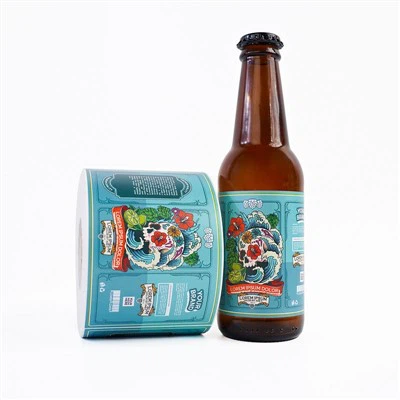
Roll labels are labels manufactured on a continuous liner and wound around a cardboard or plastic core. They come in a long, continuous strip that feeds through a label dispenser or automatic applicator.
Key Characteristics of Roll Labels
- Continuous feed: Labels are supplied sequentially on a roll
- Machine-compatible: Designed for automatic and semi-automatic labeling machines
- High-speed application: Can be applied at speeds manual methods cannot match
- Consistent placement: More precise positioning, particularly on larger labels
- Compact storage: Takes up less space than sheets for the same number of labels
- Lower waste: Generates less backing waste per label
Common Uses for Roll Labels
- Beverage bottles, jars, and food containers
- Cosmetic and personal care products
- Industrial and chemical containers
- Barcode and shipping labels
- Any product requiring automated or high-speed labeling
What Are Sheet Labels?
Sheet labels are pre-cut, self-adhesive labels arranged on flat sheets-typically in standard sizes like A4 or 8.5 x 11 inches. Each sheet contains multiple labels, and they come with a peelable backing for easy hand application.
Key Characteristics of Sheet Labels
- Flat format: Labels sit on individual sheets
- Hand application: Designed for manual peel-and-stick use
- Low upfront cost: No special equipment required
- Flexible: Can be printed on standard office printers
- Limited automation compatibility: Not suitable for most automated systems
- Higher labor cost: Each label must be peeled and applied individually
Common Uses for Sheet Labels
- Small-batch product testing and prototyping
- Short runs and sample projects
- Office and administrative labeling
- Promotional giveaways and event stickers
- Seasonal and limited-edition products
Roll Labels vs Sheet Labels: The Automation Reality
Machine Compatibility: The Fundamental Difference
This is the single most important factor for automation. Roll labels are the industry standard for high-volume and automated applications. They are designed to feed smoothly through automatic labeling machines, manual dispensers, and fully integrated production-line applicators.
Sheet labels, by contrast, are not suitable for automated application systems. They are designed for hand application-peeling and sticking labels one by one. While some flatbed applicators can handle sheets, they cannot match the speed or integration of a fully automated roll line. For fully or semi-automatic methods, roll labels are required.
Application Speed
The speed difference between roll and sheet labels becomes dramatic at scale.
Roll labels feed continuously through manual applicators or automated machines, allowing labeling speeds that are simply not achievable with sheet format. A manual labeler can apply 500 to 1,000 labels per hour. An electric label applicator can apply up to 3,600 labels per hour-four to five times faster than hand application. Fully automated machines can handle hundreds of items per minute.
Sheet labels require peeling individual labels from a flat backing sheet-manageable for occasional low-volume use but impractical for consistent production. Users consistently report that sheets are harder to peel and take much longer than rolls.
Verdict: Roll labels are dramatically faster for any operation labeling more than 50 to 100 products per day.
Consistency and Precision
Roll labels offer more consistent and precise placement, particularly on larger labels. When applied by machine, every label goes on at the same angle, in the same position, with the same pressure. This consistency is critical for quality control and professional presentation.
Sheet labels, applied by hand, are inherently less consistent. Placement varies from label to label, and accuracy decreases as label size increases.
Verdict: Roll labels deliver superior consistency through automation.
Cost Structure
Sheet labels have lower upfront costs and are more economical for low-volume printing. They require no special equipment-just a standard printer. For startups and micro-businesses, sheet labels are almost always the most cost-effective entry point.
Roll labels become more cost-effective at scale. The per-unit cost decreases as quantities increase, making them the go-to option for large-volume orders. Roll labeling offers savings in materials and ink cost, ultimately reducing the cost per label. Beyond the material cost, roll labels reduce labor time, minimize printing errors, and improve packaging efficiency.
Verdict: Sheet labels win on upfront cost; roll labels win on total cost at scale.
Reload Time and Downtime
Production downtime is the enemy of efficiency. Roll labels typically reload in about 15 seconds. Sheet labels take approximately 35 seconds per sheet to reload-and that is assuming no misalignment or jams.
Verdict: Roll labels minimize downtime and keep production moving.
Risk of Jams and Curling
Roll labels have virtually no risk of curling or jamming when used with compatible equipment. Sheet labels carry a high risk of curl and jams, particularly in high-volume environments.
Verdict: Roll labels are more reliable for continuous production.
Storage and Handling
Roll labels are compact and efficient to store. They take up less space per label count than sheets. However, they require holders or dispensers.
Sheet labels stack flat and are easy to store, but they require more space per label and are more susceptible to damage from moisture or bending.
Verdict: Roll labels offer more efficient storage for large volumes.
Critical Roll Label Specifications for Automation
If you choose roll labels for automation, you must get the specifications right. Getting them wrong means an unusable order.
- Core size: The inner diameter of the cardboard core the label roll is wound on. Standard sizes are 1 inch and 3 inches. This must match your applicator.
- Wind direction: Labels can be wound face-out or face-in, with the design at the top or bottom of unwind. This must be compatible with your applicator.
- Label gap: The space between individual labels on the backing liner. Standard gap is typically 0.1 to 0.125 inches. Some applicators require a specific gap.
- Liner strength: The backing material must be strong enough to feed through the machine without tearing.
- Roll diameter: The outer diameter of the full roll must fit your applicator's capacity.
Confirm all specifications with your co-packer or machine supplier before mass production.
Frequently Asked Questions
Q1: Can sheet labels be used in automatic labeling machines?
No. Sheet labels are not compatible with most automatic labeling systems. For fully or semi-automatic methods, roll labels are required. Sheet labels are designed for manual application only.
Q2: Are roll labels more expensive than sheet labels?
It depends on volume. Sheet labels have lower upfront costs and are cheaper for small quantities. Roll labels become more cost-effective at scale because the per-unit cost decreases as quantities increase. For more than a few hundred labels, roll labels typically offer better value.
Q3: How fast can roll labels be applied automatically?
Manual labelers apply 500 to 1,000 labels per hour. Electric label applicators apply up to 3,600 labels per hour-four to five times faster. Fully automated machines can handle hundreds of items per minute.
Q4: What happens if I order roll labels with the wrong specifications?
An unusable order. If the core size, wind direction, or label gap does not match your applicator, the labels will not feed properly. This can cause jams, misalignment, and production downtime. Always confirm specifications with your machine supplier before ordering.
Q5: When should I switch from sheet labels to roll labels?
Switch when the limitations of sheet labels start costing you time or money. Signs include: (1) you are labeling more than 50 to 100 products per day; (2) manual application is becoming a bottleneck; (3) you are scaling production and need consistency; (4) you are investing in or already using automated equipment. The typical switch point is around 500+ labels per SKU per batch.