UV Printing vs Inkjet Printing Labels: Which Is More Durable?

Researching label‑printing technologies brings confusing jargon, with UV and inkjet printing frequently misread as separate options. In reality, UV printing is often an inkjet variant.
The proper comparison is UV inkjet versus aqueous (water‑based) inkjet. Both deploy inkjet printheads to eject fine ink droplets onto label stock, yet differ sharply in ink chemistry and curing method - a distinction that heavily impacts durability.
This guide clarifies the differences between UV and conventional inkjet labels to help you select technology matching your durability requirements.
What Is UV Printing?
UV inkjet printing employs custom‑formulated inks that stay liquid until UV‑light exposure. As printheads lay ink on label stock, UV‑LED lamps instantly polymerize it into a tough solid film bonded to the substrate.
This process relies on curing, not drying. Instead of evaporating like conventional inks, UV inks undergo near‑instant photochemical conversion from liquid to solid.
Since the ink neither absorbs into materials nor requires evaporation, it adheres well atop films, foils and synthetic substrates where water‑based inks perform poorly.
Key Properties of UV-Printed Labels
- Instant curing: No drying time needed-labels are ready immediately
- Superior durability: Cured ink forms a tough, resilient surface
- Scratch and abrasion resistant: UV-cured inks resist scuffing and scratching
- Chemical resistant: Cross-linked polymers resist solvents and chemicals
- Waterproof: Non-porous cured film repels water
- UV and fade resistant: High lightfastness without additional protection
- Broad substrate compatibility: Prints on films, foils, plastics, metal, glass, and more
- Vibrant colors: Photo-quality results with sharp detail
Limitations of UV Printing
- Higher equipment cost: UV printers are more expensive than aqueous inkjet systems
- Higher ink cost: UV inks cost more per liter than water-based alternatives
- Glossy finish: UV inks naturally produce a glossy, tactile finish
- White ink opacity: May require white underprinting on dark or clear substrates
Common Applications for UV-Printed Labels
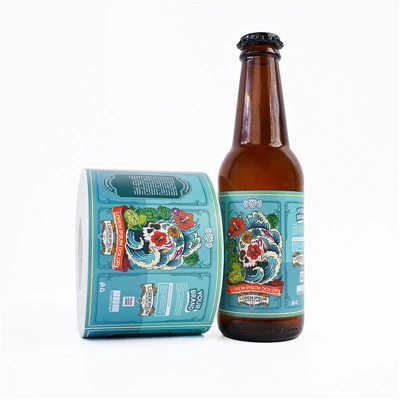
Beverage bottles (water, beer, cold brew)
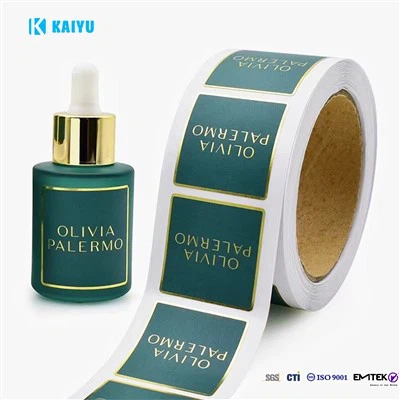
Cosmetic and skincare products
Industrial and chemical labels
Outdoor signage and durable goods
Electronics and automotive labels
What Is Inkjet Printing (Aqueous)?
Most associate "inkjet printing" with desktop aqueous inkjet, which uses water as the main pigment/dye carrier.
Unlike UV printing, aqueous inkjet lacks instant curing. After ink is jetted onto label stock, heat evaporates water, leaving pigments or dyes bonded to the surface. It forms a thinner, softer ink layer and permeates porous substrates such as uncoated, kraft and recycled papers - a trait UV inks cannot match.
Key Properties of Aqueous Inkjet Labels
- Lower upfront cost: Printers and inks are more affordable
- Excellent color quality: Rich, vivid colors on appropriate substrates
- Natural aesthetic: Softer, more matte finish on paper
- Lower environmental impact: Water-based inks have low VOC emissions
- Works on porous materials: Excellent for paper, kraft, and uncoated stocks
- Flexible: Can print on a wide range of materials
Limitations of Aqueous Inkjet Labels
- Requires drying time: Ink must dry before handling
- Lower durability: Susceptible to smudging, fading, and water damage
- Not waterproof: Water can cause ink to bleed or run
- Requires lamination for protection: Often needs varnish or laminate for wet environments
- Limited substrate range: Struggles with non-porous materials like films and foils
- Shorter outdoor life: May fade or degrade in sunlight
Common Applications for Aqueous Inkjet Labels
Paper-based product labels
Artisanal and craft products (kraft paper labels)
Short-run and prototyping
Indoor, dry-environment labeling
Eco-friendly and clean-beauty product lines
Head-to-Head Durability Comparison
1. Scratch and Abrasion Resistance
UV printing wins decisively. The cured UV film is hard and abrasion-resistant immediately after printing. UV-cured inks are resistant to scuffing and scratching, and they can be durable without requiring additional varnish or coating steps. For labels that will be handled frequently-cosmetics, beverages, industrial goods-this durability is essential.
Aqueous inkjet labels are much softer. Without a topcoat, varnish, or laminate, raw aqueous prints are not suited for humid environments or direct contact. They smudge more easily and show wear faster.
Verdict: UV printing offers dramatically superior scratch and abrasion resistance.
2. Water and Moisture Resistance
UV printing is fully waterproof. The cured ink forms a non-porous film that repels water. UV-curable inks are highly durable, waterproof, scratch-resistant, and fade-resistant. Beverage labels printed with UV ink on PP film stock handle condensation, casual scuffing, and even ice baths.
Aqueous inkjet is not waterproof. Water can cause the ink to bleed, run, or fade. Even indoors, humidity can be a problem. For true water duty, aqueous inkjet requires additional lamination or varnish.
Verdict: UV printing is clearly superior for moisture-prone applications.
3. Chemical Resistance
UV printing offers excellent chemical resistance. Cross-linked systems are generally highly resistant to chemicals, which explains the performance of UV-curable inkjet inks. UV-cured inks resist solvents, cleaning agents, and industrial chemicals.
Aqueous inkjet has limited chemical resistance. Without protective coatings, water-based inks can be damaged by alcohols, cleaners, and solvents.
Verdict: UV printing is the clear choice for chemical exposure.
4. UV Light and Fade Resistance
UV printing offers excellent lightfastness. Xeikon invested in high-quality UV inks with great lightfastness scores without any additional protective finishing. UV-cured inks resist fading for years. For outdoor applications, UV inks are designed for long-term outdoor signage use.
Aqueous inkjet is more susceptible to fading. Over time, labels printed with inkjet technology may exhibit higher susceptibility to fading, particularly when subjected to sunlight or moisture. Water-based inks can fade in direct sunlight within months.
Verdict: UV printing offers far superior UV and fade resistance.
5. Temperature Resistance
UV printing is heat resistant. The polymers formed after the complete curing of UV-curable inkjet have a high melting point. UV-cured inks can withstand high temperatures and mechanical stress.
Aqueous inkjet has lower heat tolerance. The water-based carrier limits the thermal stability of the final print.
Verdict: UV printing handles heat better.
6. Substrate Compatibility
UV printing prints on virtually anything-films, foils, plastics, metal, glass, wood, paper, and more. UV inkjet handles non-porous materials that aqueous inks cannot reliably print on.
Aqueous inkjet is limited to porous materials like paper, kraft, and uncoated stocks. It struggles with films, foils, and synthetic substrates.
Verdict: UV printing offers vastly broader substrate compatibility.
7. Cost
UV printing has higher upfront costs-printers and inks are more expensive. However, there are no setup fees and low minimums. For durable labels, the higher material cost often pays for itself through reduced failure rates.
Aqueous inkjet has lower upfront costs. Printers and inks are more affordable. However, the need for lamination or varnish to achieve durability adds cost and complexity.
Verdict: Aqueous is cheaper upfront. UV can be more cost-effective for durable applications.
Frequently Asked Questions
Q1: Is UV printing the same as inkjet printing?
No. UV printing is an inkjet type with instantly UV‑cured inks. Aqueous (water‑based) inkjet dries by evaporation. Most "UV vs inkjet" comparisons mean UV inkjet vs aqueous inkjet.
Q2: Which is more durable‑UV or aqueous inkjet?
UV is much more durable. Its inks resist scratches, water, chemicals and fading without extra coating. Aqueous prints are softer and smudge‑prone, needing lamination or varnish for harsh conditions.
Q3: Can aqueous inkjet labels gain durability?
Yes, via varnish, topcoat or laminate, though this raises cost and adds steps. UV printing achieves comparable or better durability right off press.
Q4: Better for outdoor labels? UV printing. Its inks resist sunlight, water and weather. Aqueous labels fade and water‑damage easily outdoors.
Q5: How to select UV or aqueous inkjet?
Three considerations:
- Substrate: UV for films, foils, plastics; aqueous for paper, kraft.
- Environment: UV for moisture, chemicals, outdoor or heavy handling; aqueous for dry indoor use.
- Budget: Aqueous has lower upfront cost; UV cuts failure and long‑term costs with higher durability.