Synthetic Labels vs Paper Labels: Durability Comparison for Businesses

When it comes to labeling your products, the material you choose can mean the difference between a label that stays perfect for years and one that wrinkles, smudges, or falls off within weeks. For businesses, this is not just an aesthetic concern-it is a matter of operational efficiency, brand reputation, and cost management.
The choice between synthetic labels and paper labels is one of the most fundamental decisions in product packaging. Both have their place. Both can look professional. But when it comes to durability, they operate in completely different leagues.
This guide breaks down the durability comparison between synthetic labels and paper labels, helping you understand which material is right for your business.
What Are Paper Labels?
Paper labels are exactly what they sound like: labels made from wood pulp and other cellulose fibers. They are the most traditional and widely used label material, found everywhere from retail shelves to shipping boxes.
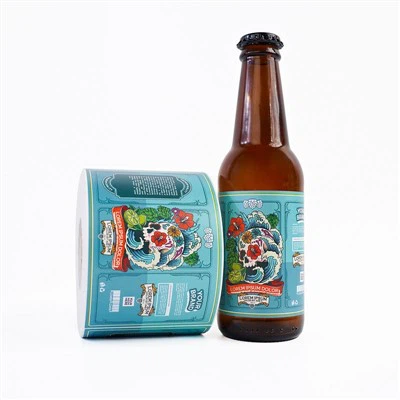
Paper labels come in a variety of finishes-semi-gloss, matte, textured, felt, and estate papers. They print beautifully, offer a premium tactile feel, and are especially popular for products like wine, specialty foods, and artisanal goods.
Key Properties of Paper Labels
- Cost-effective: Paper is generally the cheapest label material available
- Excellent print quality: The porous surface absorbs ink for sharp, vibrant results
- Natural aesthetic: Offers warmth and texture that synthetic materials cannot replicate
- Biodegradable and recyclable: Breaks down in standard paper recycling streams
- Wide variety: Available in many finishes and textures
- Short lifespan: Not designed for long-term durability in challenging conditions
Common Uses for Paper Labels
- Dry goods and pantry items
- Shipping boxes and cartons
- Retail price tags and promotional stickers
- Short-term product launches and seasonal items
- Products stored exclusively indoors in dry conditions
What Are Synthetic Labels?
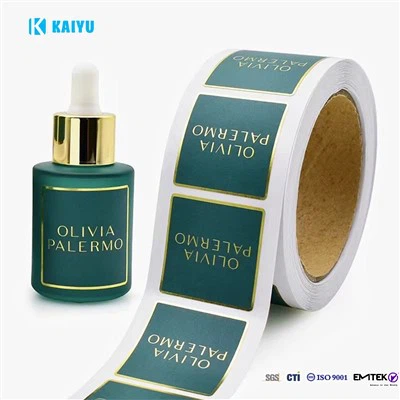
Synthetic labels are made from plastic-based materials designed to withstand harsh conditions. The most common synthetic materials include polypropylene (BOPP), polyester (PET), polyethylene (PE), and vinyl (PVC).
Unlike paper, which absorbs moisture and tears under stress, synthetic films offer a molecularly stable surface that resists the most common industrial "label killers": moisture, solvents, UV radiation, and mechanical abrasion.
Key Properties of Synthetic Labels
- Waterproof: Completely resistant to moisture, condensation, and submersion
- Tear-resistant: Difficult to tear, even with force
- Chemical-resistant: Resists oils, solvents, and many chemicals
- UV-resistant: Resists fading and degradation from sunlight
- Long lifespan: Can last 5 years or more outdoors
- Flexible: Conforms to curved and irregular surfaces
Common Synthetic Materials Compared
| Material | Durability | Key Properties | Common Use |
|---|---|---|---|
| Polypropylene (BOPP) | High | Water-resistant, flexible, cost-effective | Product labels, food packaging |
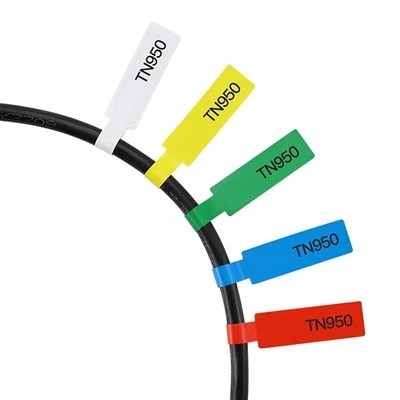
| Polyester (PET) | Very high | Chemical and heat resistant, dimensional stability | Asset tags, electronics, industrial |
| Vinyl (PVC) | High | Conformable, outdoor durable | Outdoor signs, vehicles |
| Polyethylene (PE) | Moderate | Flexible, squeezable | Bottles, tubes |
Head-to-Head Durability Comparison
1. Water and Moisture Resistance
This is the most fundamental difference between the two materials-and often the deciding factor for businesses.
Paper labels are not waterproof. They absorb moisture, which causes wrinkling, smudging, peeling, and eventual failure. Even coated papers can wrinkle and swell with water exposure or condensation. Paper labels have minimum protection against harsh environmental elements. In refrigerated environments, paper labels often struggle due to condensation, which can cause them to wrinkle, weaken, or lose adhesion over time.
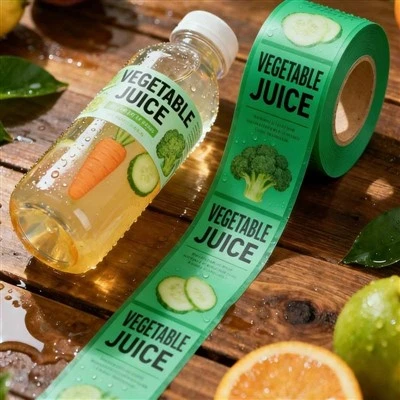
Synthetic labels are engineered to handle wet conditions. BOPP labels are waterproof, oil-resistant, and designed to handle tough conditions. Water beads off the non-porous surface. They can be submerged, refrigerated, iced down, or exposed to rain without damage.
Verdict: Synthetic labels win decisively for any application involving moisture.
2. Chemical and Oil Resistance
Paper labels have limited chemical resistance. They can degrade when exposed to oils, solvents, or cleaning products. Even with protective coatings, paper still won't match film for chemical resistance.
Synthetic labels, particularly polyester (PET) and polypropylene (BOPP), offer excellent chemical resistance. BOPP is impervious to oils, making it essential for cosmetics, lotions, and food products that contain oils. Polyester provides even higher chemical resistance, making it the standard for industrial and chemical environments.
Verdict: Synthetic labels are clearly superior for chemical and oil resistance.
3. Tear and Abrasion Resistance
Paper labels are relatively fragile. They can tear easily, especially when wet. Without protection, paper labels can show wear quickly, especially in transit or on store shelves. Scuffing can reduce the readability of barcodes and variable data over time.
Synthetic labels are tear-resistant and durable. BOPP labels are both tear, weather, and scratch resistant. Polyester offers very high tear resistance. When coated the right way, film labels are tough-they don't tear easily, resist water and oils, and can handle humidity, temperature changes, and lots of handling.
Verdict: Synthetic labels offer dramatically superior tear and abrasion resistance.
4. Temperature Resistance
Paper labels have a limited temperature range. They perform best at room temperature and can struggle with extreme heat or cold.
Synthetic labels offer excellent temperature resistance. BOPP performs well across a wide temperature range. Polyester (PET) is the gold standard for heat resistance, maintaining dimensional stability at high temperatures where other films might melt or distort. Polyester can last upwards of 5 years outdoors, while paper degrades much faster.
Verdict: Synthetic labels are superior for extreme temperatures.
5. Lifespan and Longevity
Paper labels have a relatively short lifespan. They are best for short to medium life cycle labels. In demanding environments, paper labels often need to be replaced sooner-which can cost more in the long run than choosing synthetic from the start.
Synthetic labels are built to last. In general, synthetic papers provide superior durability versus traditional paper in the form of tear, water, and chemical resistance. This can extend the life of the end application, requiring less reprints and reducing costs over the life cycle. Film labels typically maintain over 95% adhesion even after extended outdoor use, lasting roughly 30% longer than standard paper labels in equivalent conditions.
Verdict: Synthetic labels offer significantly longer lifespan and better long-term value.
The Cost Consideration
While synthetic labels have higher upfront costs, the total cost of ownership tells a different story.
Paper labels are less expensive initially. They are a smart fit when products aren't exposed to moisture, oils, or heavy handling. For dry, indoor use, paper is often the most cost-effective option.
Synthetic labels cost more upfront. However, synthetic papers can provide economy versus lamination. Printing directly on synthetic paper saves the time and hassle of laminating. For products exposed to moisture, handling, or cleaning, synthetic labels can prevent label failures that lead to rework, returns, or poor product appearance-which often justifies the higher material cost.
Film labels typically last roughly 30% longer than standard paper labels in equivalent conditions. When you factor in replacement costs, reprinting, and brand damage from peeling or damaged labels, synthetic labels often prove more cost-effective over the product's lifecycle.
Frequently Asked Questions
Q1: Are synthetic labels more durable than paper labels?
Yes. In general, synthetic papers provide superior durability versus traditional paper in the form of tear, water, and chemical resistance. Synthetic labels are waterproof, tear-resistant, and resistant to oils, chemicals, and UV exposure-properties that paper labels simply cannot match.
Q2: Are synthetic labels more expensive than paper labels?
Synthetic labels have higher upfront costs. However, they last roughly 30% longer than standard paper labels in equivalent conditions. When you factor in replacement costs, reprinting, and brand damage from label failures, synthetic labels often prove more cost-effective over the product's lifecycle.
Q3: Can paper labels be made waterproof?
Paper labels can be coated with water-resistant layers, but they are not truly waterproof. Even wet-strength paper will eventually absorb moisture. For full waterproof performance, you need synthetic materials like BOPP, PET, or vinyl.
Q4: Which synthetic material is the most durable?
Polyester (PET) offers the highest durability among synthetic materials. It provides exceptional chemical and heat resistance, dimensional stability, and can last 5 years or more outdoors. Polypropylene (BOPP) offers a good balance of durability and cost-effectiveness, while vinyl is highly conformable and ideal for outdoor use.
Q5: How long do synthetic labels last outdoors?
High-quality synthetic labels can last 5 years or more outdoors. With UV-curable inks, polyester face stock, permanent acrylic adhesive, and PET overlaminate, labels routinely last 5–10 years in indoor industrial environments and 5–7 years outdoors with combined chemical and UV exposure. Paper labels typically last only a few months outdoors at best.