Stop the Smudge: Why Your Thermal Labels Fade or Peel in Transit
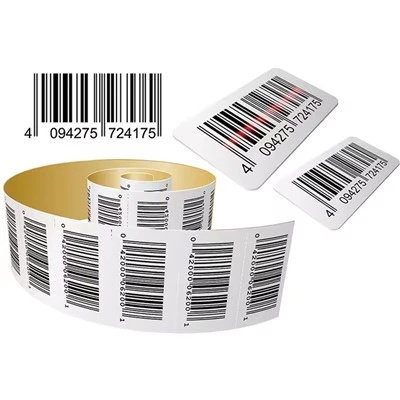
A shipping label that leaves the warehouse crisp and legible can arrive at its destination unreadable. The barcode is smudged. The text has faded to a pale grey. Or worse-the label has lifted at the edge and is peeling away from the carton.
This is not a rare defect. A label that fails in transit triggers reprints, manual rework, carrier chargebacks, and in some cases, a rejected delivery. Research on cross-border logistics found that roughly 15% of last-mile delivery failures are directly related to label readability. The label is not a minor consumable. It is a data carrier, and when it fails, the shipment fails with it.
This guide explains the four root causes behind thermal label fade and peel, and what to specify so the label survives the journey.
Root Cause 1: Direct Thermal Labels Are Designed to Fade
The Chemistry of a Disappearing Image
A direct thermal label forms its image by heating a coating on the paper. The heat triggers a chemical reaction that turns the coating black. No ribbon is involved. This is why direct thermal is cheap and convenient-and why its image is inherently vulnerable.
The same reaction that creates the image can be reversed or degraded by heat, sunlight, and abrasion. Direct thermal labels are best suited for short-life applications-shipping labels, receipts, and temporary tags with a lifespan measured in weeks or months, not years. A direct thermal label exposed to a hot truck, direct sun, or friction on a sorting belt will fade.
When Fading Is Acceptable-and When It Is Not
For a one-way shipping label that is scanned and discarded within days, fading may never become a problem. For a pallet tag that must remain scannable after weeks in transit, a direct thermal label is the wrong specification. If the label must survive extended exposure to heat, sunlight, or chemicals, thermal transfer is the appropriate technology.
Root Cause 2: Thermal Transfer Fails When Ribbon and Stock Are Mismatched
The Ribbon Is Half the System
Thermal transfer uses a heated printhead to melt ink from a ribbon onto the label. The ribbon-wax, wax-resin, or resin-determines the durability of the print. A resin ribbon on a compatible synthetic stock produces a print that resists abrasion, chemicals, and UV exposure. A wax ribbon on the same stock may smudge under friction.
The failure mode is not the technology itself. It is the pairing. A label printed with the wrong ribbon for its face stock can smear, flake, or fade even though the printer and the label are both "working".
The Topcoat Variable
Some thermal labels carry a protective topcoat-a barrier layer that resists plasticizers, oils, humidity, and smudging. A topcoated direct thermal label performs better than an uncoated one, but it is still a direct thermal label. The topcoat extends life; it does not change the fundamental chemistry. For thermal transfer, a topcoat can further improve chemical and abrasion resistance, particularly when paired with a resin ribbon.
Root Cause 3: Cold and Heat Break the Adhesive Bond
Low Temperature Turns Adhesive Brittle
Pressure-sensitive adhesives are formulated to flow and wet out on a surface. Cold temperatures below roughly 40°F can cause general-purpose adhesives to become firm and brittle. The label may appear to stick at application, but the adhesive has not built sufficient bond strength. Hours later, or after a temperature cycle, the edges lift and the label falls off.
This is why the application temperature and the service temperature range are different specifications. A label applied in a cold warehouse needs an adhesive rated for that application temperature. A label that will travel through a freezer needs an adhesive rated for the service temperature it will experience.
Heat and Humidity Attack from the Other Side
High heat softens adhesive and can cause it to ooze or slide. Humidity introduces moisture that can weaken the bond between the adhesive and the carton, particularly on corrugated board that absorbs water. When a moist box moves into a colder environment, the box firms up but the adhesive has already lost solid contact, and the label may detach.
Root Cause 4: The Label Was Never Tested for the Actual Route
Laboratory Conditions Are Not Transit Conditions
A label that passes a room-temperature adhesion test has not been validated for a shipment that crosses a 40°C temperature swing, sits in a humid container, and passes through multiple sorting facilities with abrasive belts.
Meaningful validation includes high-low temperature cycling, damp heat aging, and friction testing on the actual carton surface-not a glass plate. A label that performs on glass may fail on recycled corrugated board, and the laboratory data will never reveal the difference.
How to Specify a Thermal Label That Survives
Step 1: Match the Technology to the Required Lifespan
If the label must remain readable for months or years, specify thermal transfer with a resin ribbon and a synthetic stock. If the label is a short-life shipping document, direct thermal with a topcoat may be sufficient.
Step 2: Specify the Adhesive for the Route, Not the Warehouse
Ask for the minimum application temperature and the service temperature range. If the label will be applied in a cold environment or will travel through freezing conditions, specify a low-temperature or all-temperature adhesive.
Step 3: Test on the Actual Carton Material
Request samples and apply them to your real corrugated board, not a laboratory reference surface. Run a temperature cycle and a friction test. Check for edge lift, adhesive transfer, and barcode readability after cycling.
Step 4: Control Print Quality Before the Label Leaves the Building
A faded label may be a printing problem, not a material problem. Verify printhead condition, darkness settings, and speed. A barcode that does not meet the required ANSI grade before shipping will not improve in transit.
Step 5: Plan for Custom Constructions and OEM Consistency
A thermal label that performs in a sample may fail in production if the adhesive, topcoat, or face stock varies between batches. A production factory with experience in thermal media can match the ribbon, stock, and adhesive to your route and your printer. For brands using an OEM model, the specification must include the adhesive's temperature ratings, the topcoat requirement, the ribbon compatibility, and the batch-level test data. A custom thermal label is only as reliable as the factory's ability to hold those parameters consistent across every roll.
FAQ
Q1: Why do my direct thermal labels fade so quickly?
A: Direct thermal labels form an image through a heat-sensitive coating. That image degrades when exposed to heat, sunlight, and abrasion. They are designed for short-life applications. If the label must last longer, thermal transfer is the appropriate technology.
Q2: Why do thermal transfer labels smudge even though they use a ribbon?
A: The ribbon and the face stock must be matched. A wax ribbon on a stock that needs a resin ribbon can smudge or flake. A topcoated stock and a compatible resin ribbon produce the most durable print.
Q3: Why do labels fall off in cold weather?
A: Cold temperatures can make pressure-sensitive adhesives firm and brittle before they build a full bond. A label applied in a cold warehouse may lift hours later. Specify an adhesive with a minimum application temperature suited to your conditions.
Q4: What is the difference between application temperature and service temperature?
A: Application temperature is the lowest temperature at which the adhesive will work at the moment of labeling. Service temperature is the range the adhesive can withstand after the label has been applied and the bond has fully developed. They are separate specifications and both matter.
Q5: How do I test whether a label will survive transit?
A: Apply the label to your actual carton material, run a high-low temperature cycle, expose it to damp heat, and test the barcode readability after friction. A laboratory test on glass or a flat sheet does not predict performance on corrugated board in a real shipment.