Sticks Tight, Washes Off Clean: How Wash-Off Labels Make PET Recycling Purer
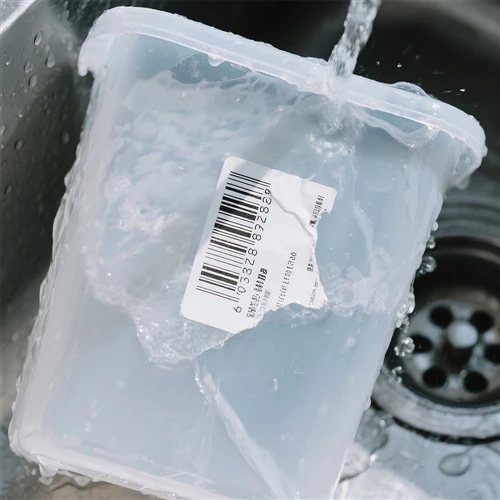
You drop a plastic bottle into the recycling bin and feel good about it. But what happens next is more complicated than most people realize. A label that sticks perfectly on the shelf can become a stubborn problem in the recycling plant. That is where wash-off labels come in.
The Problem: When Labels Refuse to Let Go
Why Traditional Labels Contaminate PET Recycling
PET (polyethylene terephthalate) is one of the most widely used packaging plastics. It is strong, transparent, and highly recyclable. But labels applied to PET bottles often get in the way. Traditional pressure-sensitive adhesives can leave residue that discolors the material or clogs recycling systems. This degrades the quality of recycled PET and discourages its use in high-value applications like bottle-to-bottle reuse.
The issue is not small. Residues from traditional pressure-sensitive labels and their adhesives can contaminate the recycling stream during the label removal process, hindering high-value recycling of PET bottles. In a comparative test, conventional self-adhesive labels on PET bottles had a wash-off rate of only 40%. That means more than half the label stayed behind, contaminating the PET flakes.
What Happens at the Recycling Plant
PET recycling typically follows a standard process. Bottles are collected, sorted, and crushed into small flakes. These flakes are then washed in hot alkaline water - usually around 70–85°C with 1–2% sodium hydroxide. After washing, the material goes through a float-sink separation tank. Materials with a density lower than water float to the surface. PET flakes, which are denser than water, sink to the bottom.
The goal is simple: labels and adhesives should float away, while clean PET flakes sink. But with traditional adhesives, much of the label and glue stays stuck to the PET. That contamination causes cloudiness, yellowing, and black specks in recycled PET. In severe cases, the recycled material becomes unsuitable for food-contact applications.
How Wash-Off Labels Work
The Key Technology: Adhesive That Lets Go on Command
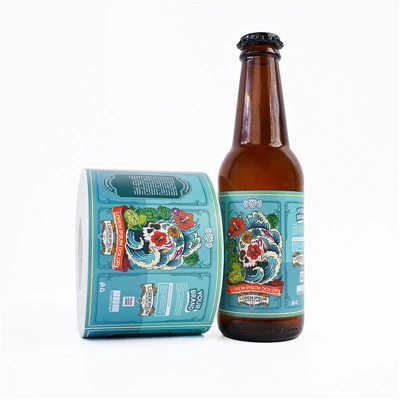
A wash-off label looks and feels like a normal label. It sticks firmly to the bottle during use. It survives moisture, handling, and cold storage. But when it enters the recycling wash, something changes.
The adhesive is engineered to release under specific conditions: hot alkaline water. During the industrial wash, the adhesive softens and lets go of the PET surface. Critically, the adhesive remains attached to the label's face material instead of dissolving into the wash water. The label and its adhesive float to the surface together, while clean PET flakes sink to the bottom.
Why the Adhesive Floats Away
This float-sink behavior is the heart of the technology. The label's face material - typically a PP or PE film - has a density lower than water. When the adhesive releases from the PET, the entire label structure floats. The PET flakes, being denser, sink. The result is a clean separation with no adhesive residue left in the PET stream.
Real-World Performance
The numbers are impressive. In a pilot project with Nongfu Spring and UPM Raflatac, wash-off labels achieved a removal rate exceeding 99.9%. Another trial showed a label removal rate of about 99.6%, compared to just 40% for conventional labels under the same conditions.
Avery Dennison's CLEANFLAKE® technology reports a 99.9% wash-off rate in 85°C alkaline water with no adhesive residue. The resulting PET flakes reach AAA-grade quality, suitable for food-grade recycled PET production.
Why This Matters for Recycling Quality
Cleaner PET Flakes, Higher Value
When labels and adhesives are completely removed, the PET flakes are purer. This means they can be recycled into new bottles - a process called bottle-to-bottle recycling. Without clean separation, recycled PET often ends up in lower-value applications like fiber or strapping. Wash-off labels make closed-loop recycling possible.
Real-World Adoption
This is not just a laboratory concept. Companies like Heineken, Fever-Tree, and Desperados already use rinse-off technology in professional washing facilities. In China, Junlebao's Yuexianhuo milk brand became the first dairy product to adopt wash-off labels on PET bottles, using Avery Dennison's CLEANFLAKE® technology across multiple bottle sizes.
Meeting Regulatory and Industry Standards
Wash-off labels are certified by major recycling authorities. The Association of Plastic Recyclers (APR) in the US and RecyClass in Europe both recognize wash-off adhesives as meeting design-for-recyclability standards. HERMA's 62Rpw adhesive, for example, is certified by cyclos-HTP to have no negative effects on the recycling path for transparent PET bottles.
How to Choose Wash-Off Labels for Your Product
Step 1: Confirm Your Recycling Stream
Wash-off labels work best where industrial recycling facilities use hot caustic washing. Check whether the recycling infrastructure in your target market uses this process. In regions with different recycling methods, results may vary.
Step 2: Match the Adhesive to Your Conditions
Wash-off adhesives are available for different performance needs. Some perform reliably in extreme cold-chain conditions down to -27°C while still separating cleanly during recycling. Others are designed for standard ambient storage. Match the adhesive to your product's real-world conditions.
Step 3: Check Certifications
Look for labels certified by APR Design Recognition, RecyClass, or cyclos-HTP. These certifications verify that the label and adhesive meet strict standards for recyclability. HERMA's 62Rpw adhesive is certified for transparent PET bottles at 70°C in 1% alkaline water.
Step 4: Test Before Committing
Request samples and run a wash-off test with your actual product. Ask your printer for data on removal rates under conditions similar to your target recycling market. A small test can prevent a costly mistake.
FAQ
Q1: What is a wash-off label?
A: A wash-off label is an adhesive label designed to detach cleanly from a container during the industrial washing step of recycling. The adhesive releases in hot alkaline water, and the label floats away while PET flakes sink.
Q2: How well do wash-off labels actually work?
A: Very well. Pilot trials with UPM Raflatac and Nongfu Spring showed removal rates exceeding 99.9%. Avery Dennison's CLEANFLAKE® reports a 99.9% wash-off rate with no adhesive residue. By comparison, conventional labels achieve only about 40% removal.
Q3: Why are wash-off labels important for PET recycling?
A: Traditional labels leave adhesive and ink residue that contaminates PET flakes, causing discoloration and reducing quality. Wash-off labels eliminate this contamination, making it possible to produce food-grade recycled PET for bottle-to-bottle recycling.
Q4: Do wash-off labels stick as well as regular labels during normal use?
A: Yes. Wash-off labels provide strong adhesion and moisture resistance during normal use. They only release under the specific hot, alkaline conditions of industrial recycling washing.
Q5: What certifications should I look for?
A: Look for APR Design Recognition (US), RecyClass (Europe), or cyclos-HTP certification. These verify that the label and adhesive meet recyclability standards for PET containers.
Q6: Can wash-off labels be used for food and beverage products?
A: Yes. Many wash-off adhesives are approved for food-contact applications. For example, HERMA's 62Rpw adhesive is cleared for direct contact with dry, moist, and fatty foods. Avery Dennison's CLEANFLAKE® complies with China's GB 4806.15-2024 food safety standard.