How Do Linerless Labels Work? The Technology Behind Adhesive Labels Without a Backing Paper
Every traditional adhesive label comes with a hidden cost: the backing paper. You peel the label off, use it, and throw the liner away. That liner - usually silicone-coated paper - cannot be recycled, cannot be burned, and will not decompose. It typically makes up about 50% of the entire label roll. For businesses that print thousands of labels a day, that is a mountain of waste.
Linerless labels solve this problem by eliminating the backing paper entirely. But how can an adhesive label exist without something to stick to? This guide explains the technology behind linerless labels, how they work, and what to consider before making the switch.
The Basic Problem: Why Labels Need a Liner
How Traditional Labels Are Built
A standard pressure-sensitive label has three layers: a face material (paper or film), an adhesive layer, and a silicone-coated backing paper called a liner. The liner's only job is to protect the adhesive until the label is ready to use. When you peel the label off, the liner goes in the trash.
Why the Liner Is a Problem
The liner creates several issues. It adds weight and volume to every roll, increasing shipping and storage costs. It generates waste that must be disposed of at a cost - one industry source estimates liner disposal costs at around €390 per ton. And because liners contain silicone, they cannot be recycled through normal paper streams.
How Linerless Labels Work: The Technology Explained
The Key Innovation: Release Coating on the Label Itself
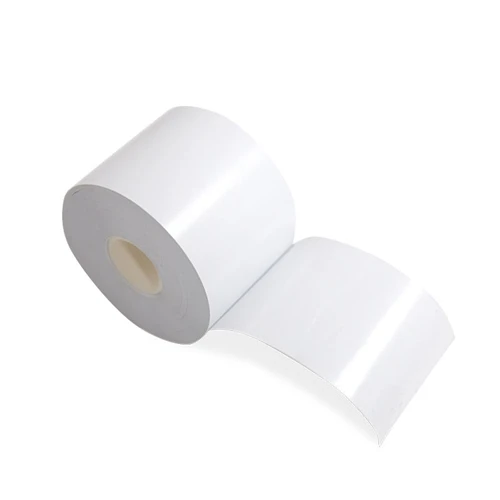
A linerless label solves the problem by putting the release coating directly onto the label. The label's face is coated with a thin silicone release layer, and the back carries the adhesive. When the roll is wound, the adhesive on one label touches the release coating on the label beneath it.
The release coating has low adhesion to the adhesive. This means the labels can be unwound without sticking to each other, and no separate liner is needed. The label essentially becomes its own backing paper.
Adhesive Technologies for Linerless Labels
Linerless labels use several types of adhesive:
Pressure-sensitive adhesive (PSA): The most common type. It stays tacky at room temperature and bonds with light pressure. Repositionable and removable versions are also available.
Heat-activated adhesive: This adhesive is dry and non-tacky at room temperature. When heated by a thermal print head, it becomes sticky. The label can then be applied to the product. This method is used in receipt and logistics applications.
Water-activated adhesive: A newer approach. The adhesive is activated by a fine water mist during application. DHL's InNo-Liner system uses this method.
The Layer Structure of a Linerless Label
A typical linerless label consists of four layers: a substrate (the face material), a thermal print layer, an adhesive layer, and a release coating. When wound into a roll, the adhesive layer contacts the release coating, preventing the labels from sticking together.
Advantages of Linerless Labels
Sustainability Benefits
The most obvious benefit is waste reduction. By eliminating the liner, linerless labels reduce material consumption by up to 50%. DHL reported a 60% reduction in waste after switching to linerless labels at its German facility. Fewer materials also mean lower carbon emissions from shipping and storage.
Cost Savings
DHL also reported that its linerless system was about 40% more cost-effective than conventional labeling. The savings come from multiple sources: lower material costs (no liner), reduced freight weight, less warehouse space needed, and lower waste disposal fees.
Operational Efficiency
Because linerless labels have no gaps between them, a roll can hold up to 60% more labels than a traditional roll of the same diameter. That means fewer roll changes, less downtime, and more labels per shipment. The label length can also be cut to fit each package, eliminating wasted blank space.
Limitations and Considerations
You Need Special Equipment
You cannot print linerless labels on a standard label printer. Linerless labels require a printer with a special non-stick roller and updated firmware. The adhesive surface would stick to normal printer rollers. This is the biggest barrier to adoption - it means new hardware investment.
Higher Maintenance
Linerless printing is tougher on the printer. Rollers need to be replaced more often, and printers require more frequent cleaning. The adhesive can leave residue over time.
Adhesive Challenges
Linerless labels need a careful balance of tack and release. If the adhesive is too strong, labels stick to themselves. If it is too weak, they fall off products. The release coating must also allow printing and, in some cases, writing with a pen or marker.
How to Choose Linerless Labels for Your Business
Step 1: Assess Your Volume and Waste
Linerless labels deliver the most value for high-volume operations. If you print hundreds or thousands of labels daily, the savings on liner disposal and material costs add up fast. For very low volumes, a standard liner system may still be practical.
Step 2: Check Printer Compatibility
Ask your printer manufacturer whether your current equipment supports linerless media. If not, calculate the cost of upgrading. Some print-and-apply systems, like Cab's HERMES QL, can handle both linerless and traditional labels, giving you flexibility.
Step 3: Test the Adhesive on Your Product
Different products need different adhesives. A label for a frozen food package needs freezer-grade adhesive. A label for a cardboard shipping box needs strong initial tack. Always request samples and test them under real conditions before committing.
Step 4: Calculate the Full ROI
The label cost per unit may be similar to standard labels. The savings come from the entire system: no liner disposal, fewer roll changes, less storage space, and lower freight costs. Factor all of these into your decision.
FAQ
Q1: What is a linerless label?
A: A linerless label is an adhesive label that does not have a backing paper (liner). Instead, the label's face is coated with a release layer, so the labels can be wound into a roll without sticking to each other.
Q2: How do linerless labels not stick to themselves on a roll?
A: A thin silicone release coating is applied to the face of the label. When the roll is wound, the adhesive on one label contacts the release coating on the label beneath it. The release coating has low adhesion, so the labels unwind smoothly.
Q3: Can I print linerless labels on my existing label printer?
A: No. Linerless labels require a printer with a special non-stick roller and updated firmware. Standard thermal printers are not designed for linerless media.
Q4: How much waste do linerless labels save?
A: Linerless labels can reduce label waste by up to 50–60%. DHL reported a 60% reduction after switching to linerless at one facility.
Q5: Are linerless labels more expensive than traditional labels?
A: The label cost per unit is often similar. The savings come from eliminating liner disposal costs, reducing freight weight, and using less warehouse space. DHL reported its system was about 40% more cost-effective overall.
Q6: What industries use linerless labels most?
A: Linerless labels are common in retail logistics, fresh food packaging, quick-service restaurants, and e-commerce fulfillment - anywhere high label volumes and waste reduction targets exist.