Safety Meets Fun: Using Photoluminescent Labels for Emergency Exits and Beyond
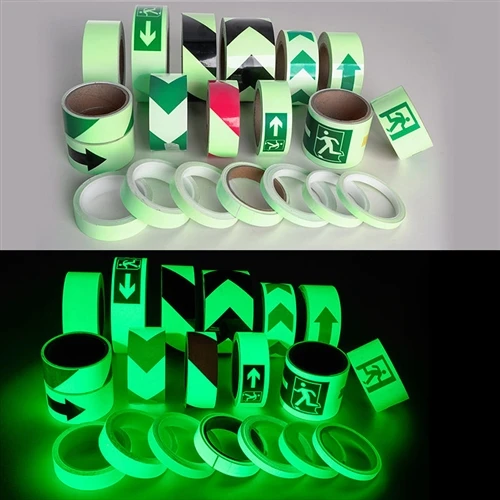
A photoluminescent label does something no ordinary sticker can do. It charges in light and glows in the dark-without a battery, a wire, or a power source. That simple property has made it a serious safety tool in buildings and ships, and a surprisingly creative material for everything from night-running gear to glow-in-the-dark packaging.
This guide explains how photoluminescent labels work, where they are used, what standards matter, and how to choose the right product for safety or creative applications.
How Photoluminescent Labels Actually Work
Absorb Light, Release It Later
A photoluminescent material contains pigments-typically strontium aluminate-that absorb energy from ambient light. When the light source disappears, the pigment releases that stored energy as a visible glow. The glow fades over time, but it can last long enough to guide someone through a dark corridor or stairwell after a power failure.
This is not the same as fluorescence, which only appears bright while a light source is present. Photoluminescence continues after the lights go out, which is exactly what makes it useful for emergency egress.
Why It Matters When the Power Fails
Smoke obscures overhead emergency lighting. In a fire, the lights that are supposed to guide people out can become invisible. Photoluminescent markings placed low-on stair edges, handrails, and door frames-stay visible near the floor, where smoke is thinner and where people naturally look when escaping.
The Standards That Separate Safety-Grade from Decorative
UL 1994 and Luminance Requirements
UL 1994 is the core standard for luminous egress path marking systems in the United States. It sets minimum luminance levels after charging stops. For example, products tested to UL 1994 must maintain at least 15 mcd/m² at 60 minutes, 10 mcd/m² at 90 minutes, 8 mcd/m² at 120 minutes, and 5 mcd/m² at 180 minutes.
A decorative glow-in-the-dark sticker does not meet these thresholds. A safety-grade photoluminescent label does.
ISO 7010 and Symbol Design
ISO 7010 governs the design and safety colors of emergency exit symbols. A compliant photoluminescent exit label uses the standardized running-man or door symbol, so evacuees recognize it instantly regardless of language.
Marine Standards: IMO and SOLAS
On passenger ships, the requirements are stricter. IMO Resolution A.752(18) requires low-location lighting along escape routes, and photoluminescent materials must meet performance criteria including luminance and durability. SOLAS regulations require escape route signs and fire equipment markings to be photoluminescent or lit, or a combination of both.
ASTM E2072
ASTM E2072 is the standard specification for photoluminescent safety markings used to supplement escape routes, emergency equipment, and obstructions. It defines minimum photometric performance for newly applied materials.
Where Photoluminescent Labels Are Used
Buildings and Egress Paths
Stair edges, handrails, door frames, and path markers use photoluminescent strips and labels to outline the escape route. These are especially valuable in buildings where emergency lighting may be inadequate or obscured by smoke.
Marine and Offshore
Ships, ferries, and offshore platforms use photoluminescent low-location lighting to mark escape routes at deck level. The material must resist saltwater, oil, fuel, and cleaning chemicals while maintaining its glow performance.
Consumer and Creative Applications
Beyond safety, photoluminescent pigments are used in apparel heat transfers, packaging, stickers, and promotional items. A custom photoluminescent heat transfer label can turn a logo into a glowing feature on nightwear or activewear, charging under sunlight or indoor lighting and releasing a visible glow in the dark.
How to Choose the Right Photoluminescent Label
Step 1: Define Whether the Job Is Safety or Decoration
A safety application requires certified performance: UL 1994, ISO 7010 symbols, and luminance data after 60, 90, 120, and 180 minutes. A decorative application may only need a pleasing glow and good printability. Mixing the two specifications is a common and costly mistake.
Step 2: Match the Material to the Environment
Photoluminescent vinyl, PET, and acrylic films are available for different conditions. Indoor building labels can use standard pressure-sensitive vinyl. Marine and industrial labels need resistance to saltwater, oils, and chemicals. Apparel applications require flexible, wash-durable heat transfer films that survive repeated laundering.
Step 3: Verify the Certification, Not Just the Glow
Ask for the test report. A label that glows brightly in a dark room may still fail UL 1994 luminance thresholds after 90 minutes. For safety applications, the certification is the specification.
Step 4: Consider Custom Shapes, Colors, and Printing
Photoluminescent materials can be die-cut, printed, and converted into custom shapes. A production factory can produce labels to your artwork, whether the job calls for standard exit symbols or a branded glow-in-the-dark design. For brands using an OEM model, confirm that the factory can maintain consistent glow performance and color across batches. Photoluminescent pigments can vary between lots, and a batch that glows dimmer or shifts in hue will undermine both safety and brand presentation.
FAQ
Q1: How do photoluminescent labels work without a battery?
A: The pigment absorbs energy from ambient light and releases it slowly as a visible glow when the light source is removed. No power source is needed; the material recharges every time it is exposed to light.
Q2: How long do photoluminescent labels glow?
A: It depends on the material grade and charging conditions. Safety-grade products tested to UL 1994 must maintain specified luminance levels for at least 180 minutes after charging stops. Decorative products may glow for a shorter time.
Q3: Are photoluminescent labels the same as glow-in-the-dark stickers?
A: The chemistry is similar, but the performance is not. Safety-grade photoluminescent labels are certified to standards like UL 1994 and ISO 7010, with verified luminance and durability. Decorative stickers are not held to those thresholds.
Q4: What standards should a safety photoluminescent label meet?
A: In the US, UL 1994 for luminous egress path marking systems. ISO 7010 for symbol design. For marine applications, IMO Resolution A.752(18) and SOLAS requirements. ASTM E2072 defines photoluminescent safety marking performance.
Q5: Can photoluminescent labels be used outdoors?
A: Yes, but the material must be specified for outdoor exposure. UV light, moisture, and temperature swings degrade some photoluminescent materials. Ask for outdoor-rated products and test samples under real conditions.