Common Failures of Medical Device Product Labels And How to Prevent Them

Medical device labels do more than show a product name. They give safety warnings, instructions, and unique barcodes (UDI). When a label fails – such as peeling off, smearing, or falling off during surgery – patient safety can be at risk. You may also face product recalls.
This guide covers the most common failures of medical device labels and how to prevent them. Whether you buy, design, or use medical devices, these tips will help you choose better labels and avoid costly problems.
Poor Adhesion on Small or Curved Medical Devices
Syringes, catheters, and surgical tools often have small or curved surfaces. Labels on these devices often lift at the edges within hours.
Why it happens
Standard adhesives are made for flat surfaces. Curved devices create tension that pulls edges up. Also, many medical devices use plastics (like polypropylene or silicone) that are naturally hard to stick to.
How to prevent it
- Use soft film materials like polypropylene that bend with the device.
- Choose high‑tack acrylic adhesives made for low‑surface‑energy plastics.
- Always test labels on the actual device before full production.
Label Smearing or Fading After Cleaning with Alcohol
Hospitals clean medical devices with alcohol wipes or bleach. Many labels become blurry or unreadable after just one wipe.
Why it happens
Direct thermal paper turns white when touched by alcohol. Standard wax‑resin ribbons can also dissolve under strong cleaners.
How to prevent it
- Use resin‑only thermal transfer ribbons with synthetic facestocks (polyester or polyimide).
- For devices cleaned often, use laminated labels with a clear protective top film.
- Ask your supplier to certify that the label passes an alcohol wipe test.
Labels Falling Off During Sterilization
Many medical devices must be sterilized before use – using ethylene oxide (EtO), gamma radiation, or steam (autoclave). Some labels cannot survive these processes.
Why it happens
Heat, moisture, or radiation can break down standard adhesives. Paper labels may turn yellow and crumble. Some adhesives lose stickiness under EtO gas.
How to prevent it
- Use sterilization‑compatible materials. For steam, choose labels rated for 121°C or 134°C.
- For gamma radiation, use cross‑linked acrylic adhesives and polyester facestocks.
- Always ask your label supplier for sterilization validation data.
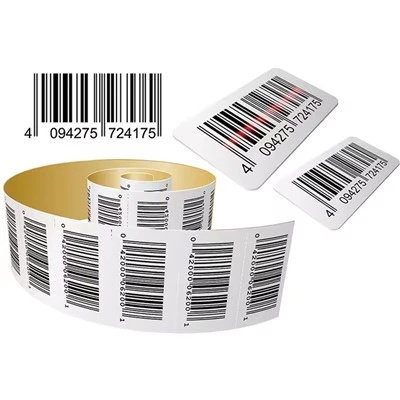
UDI Barcode Failure – No‑Reads or Poor Scanning
Medical devices must have a UDI barcode (Unique Device Identification). If the barcode does not scan, you can face tracking errors and regulatory fines.
Why it happens
Wrinkled labels or poor print quality cause most failures. Also, placing a barcode over a curved surface can distort it.
How to prevent it
- Use conformable facestocks that wrap smoothly without wrinkles.
- Print barcodes with a high‑resolution printer (300 dpi or higher) using a resin ribbon.
- Verify barcode quality with a scanner or verifier (aim for grade C or better).
- Leave enough blank space (quiet zone) around the barcode.
Label Lifting or Peeling in Cold Storage
Some medical devices – such as diagnostic kits or implants – are stored in refrigerators or freezers. Labels can lift, curl, or fall off in the cold.
Why it happens
Standard adhesives become hard and brittle below 0°C. Condensation during thawing creates a water layer that weakens adhesion.
How to prevent it
- Use cryogenic‑grade acrylic adhesives that stay flexible down to -20°C or even -80°C.
- Pair with cold‑stable facestocks like polyolefin or white polyimide.
- Apply labels at room temperature onto a dry device – never inside a cold room.
Adhesive Residue Left on the Device (Or on Patient Skin)
Some medical devices have removable labels. If the label leaves sticky residue, it can contaminate the device or irritate patient skin.
Why it happens
The adhesive is too strong or not designed for clean removal. Adhesive can also become stickier over time.
How to prevent it
- Use removable adhesive made for medical applications (acrylic or silicone based).
- Test for clean removal after heat, cold, and humidity storage.
- For skin‑contact labels, require biocompatibility testing (ISO 10993‑10).
Print Fading or Smearing of Lot Numbers and Expiry Dates
Medical device labels always show lot numbers and expiration dates. If this information becomes unreadable, the device may be considered non‑compliant and must be thrown away.
Why it happens
Direct thermal printing fades with heat, light, or rubbing. Even thermal transfer can fail if the ribbon is not matched to the facestock.
How to prevent it
- Use thermal transfer over‑printing with a resin ribbon and a synthetic matte‑white facestock (polyester or polypropylene).
- For extreme durability, use two‑ply laminates that protect the print between two clear films.
- Do a simple finger rub test after sterilization or freezing before approving the label.
Frequently Asked Questions (FAQ)
What are the most important rules for medical device labels?
In the US, the FDA requires labels to follow 21 CFR Part 801 (UDI system). In Europe, the EU MDR 2017/745 sets the rules. Both require a UDI barcode and standard symbols. Ask your supplier for a compliance statement.
Can I use the same label for both sterilization and cold storage?
Not usually. Sterilization labels must survive heat or radiation. Cold storage labels must stay flexible at low temperatures. Some high‑performance labels work for both, but you must test them under your real conditions.
What is the best material for labels that face repeated alcohol wiping?
Polyester (PET) with a resin thermal transfer ribbon is the most common choice. For harsh environments, use a laminated polyester label with the print protected under clear film. Avoid paper and direct thermal labels.
How do I test if a removable label leaves no residue?
Apply the label to your actual device, then store it in worst‑case conditions (such as 60°C for one week or -20°C for 24 hours). Peel it off slowly. No residue should remain. For skin contact, follow ISO 10993‑10.
What should I ask my label supplier before buying medical device labels?
Ask for: (1) biocompatibility data if the label touches skin; (2) sterilization compatibility reports; (3) chemical resistance test results (alcohol, bleach); (4) a sample roll to test on your device; and (5) a regulatory statement for FDA or EU MDR.