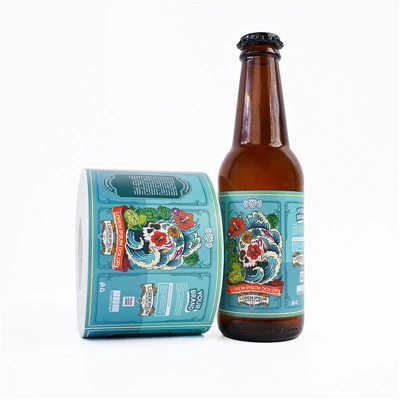
Despite their thin and lightweight form, labels play an indispensable role in modern life and various work environments, serving as crucial for information transmission and item management. Their applications span multiple fields, from daily office work to professional production, where clear labeling improves efficiency and reduces errors.
In office settings, labels are invaluable for document and data management. They are commonly used to print file names, numbers, dates, or security levels, marking folders, file boxes, and drawers for intuitive and efficient retrieval. Compared to handwritten notes, printed labels offer neat uniformity and high visual recognizability, significantly saving search time, especially when storing large amounts of documents.
The reliance on labels is even more pronounced in warehousing and logistics. Goods entering, sorting, and leaving the warehouse all depend on labels recording information such as product name, batch number, and destination. Combined with barcodes or QR codes, they enable automated scanning and tracking. In express delivery, labels carry sender and recipient information and routing codes, becoming a core credential for the flow of packages. Water-resistant and tear-resistant film labels remain legible even in cold chain or outdoor temporary storage environments, ensuring no information is lost throughout the process.
Retail and commercial displays also rely heavily on labels. Price tags, promotional notices, and product specifications on shelves are often presented using labels, with colors and layouts that can be flexibly changed according to marketing campaigns. Beautifully printed labels not only convey practical information but also enhance brand image and attract customer attention. In the food service industry, labels are used for date marking of ingredients and categorizing food preparation areas, helping to implement the first-in, first-out principle and ensure food safety.
In industrial manufacturing and laboratory environments, the uses of labels become more specialized. Asset numbers and maintenance record labels are affixed to machinery and equipment for easy inspection and maintenance management; pipes and valves are accompanied by media names and safety warning labels to reduce the risk of misoperation. In scientific research experiments, sample tubes and petri dishes are labeled with numbers and dates to ensure the traceability of experimental data and the reliability of results. Some special labels also possess high-temperature resistance, chemical corrosion resistance, or tamper-evident properties to meet the requirements of harsh operating conditions.
In addition, labels have wide applications in household life, such as categorizing storage boxes, labeling cables, and annotating photo albums, making space and objects easier to organize and remember.
The versatility of labels stems from their low cost, ease of production, and high visibility. By choosing the right material and adhesive type for the specific scenario, they can maintain stable performance in the corresponding environment. With the development of environmentally friendly materials and smart printing, labels will continue to play a meticulous and crucial role in information transmission and item management, supporting a more efficient and organized life and work.