Why Are More and More Brands Choosing Shrink Sleeve Labels?

Walk down any beverage aisle. The bottles with the boldest colors, the most detailed graphics, and the "no-label look" are almost certainly wearing shrink sleeve labels. These full-body sleeves have become the packaging format of choice for brands that want maximum shelf impact. But the reasons go far beyond good looks.
What Are Shrink Sleeve Labels?
The Basics of Shrink Sleeve Technology
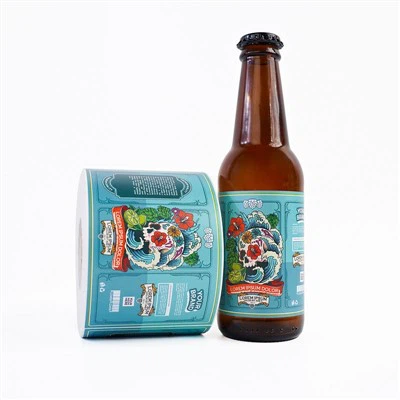
A shrink sleeve label is a plastic film printed with your artwork, formed into a tube, and slipped over a container. When heat is applied, the film shrinks tightly around the container's shape - curves, contours, and all. The result is a seamless, 360-degree label that looks like it was painted directly onto the bottle.
The Three Main Materials
Most shrink sleeves are made from one of three films:
PVC: The lowest-cost option, with shrinkage of around 60%. It works for simple shapes but is less suitable for complex containers and faces environmental scrutiny.
PETG: The current market leader for premium applications. It offers the highest shrink capability at 78–80%, excellent clarity, and strong mechanical properties. It is more expensive but delivers superior results on complex shapes.
OPS: A middle option with around 70% shrinkage and good printability, though it is more challenging to convert.
PETG has become the most popular substrate because it is more resistant to printing solvents than PVC and OPS, and it is readily recyclable through well-developed PET recycling streams.
Why Brands Are Making the Switch
360-Degree Coverage: Maximum Shelf Impact
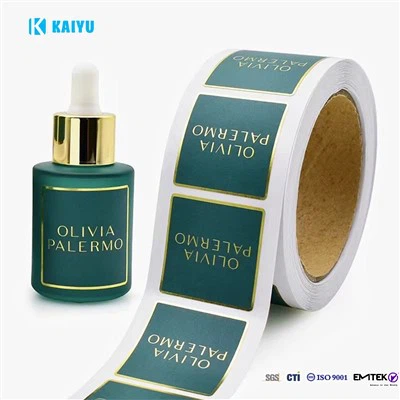
The most obvious advantage of shrink sleeves is coverage. A shrink sleeve wraps around the entire container, giving brands what industry experts call "360-degree decoration". Compared to a pressure-sensitive label, a shrink sleeve offers roughly 150% more printable area. That extra space means more room for brand storytelling, nutrition panels, QR codes, and regulatory content - all without cramming.
Complex Shape Versatility
Not every container is a simple cylinder. Many products come in contoured bottles, curved jars, or irregular shapes that standard labels cannot handle. Shrink sleeves conform seamlessly to these shapes. A pressure-sensitive label works on flat or panel-shaped packaging, but a shrink sleeve can cover a full body with complex curves.
Tamper Evidence and Functional Benefits
Shrink sleeves can extend over the cap or closure, providing built-in tamper evidence. They also perform well in high-moisture environments - refrigerated products, iced beverages, and frozen items. And because the design is printed on the inside of the film, the artwork resists friction, moisture, and handling damage.
The "No-Label Look"
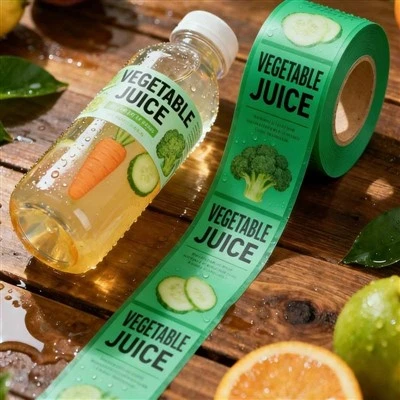
Many brands choose shrink sleeves for a specific aesthetic: the "no-label look." A transparent shrink sleeve printed with opaque graphics creates a premium appearance that makes the product look like it has no label at all. This is especially popular in beverages, where clarity and purity are part of the brand message.
The Sustainability Story
PETG and Recyclability
Early shrink sleeves had a recycling problem. PETG labels often had to be separated from PET bottles, resulting in material being discarded. But the industry has made major strides.
New PET shrink films are engineered with high thermal resistance, making them 100% compatible with PET recycling streams - allowing the label and the bottle to be recycled together. In one case, a Latin American energy drink brand switched from traditional PETG to PET shrink film and reprocessed more than 800 tons of material annually that would otherwise have been discarded.
Floatable and Perforated Sleeves
Innovia has introduced RayoFloat, a floatable polyolefin shrink sleeve material that separates easily from PET bottles during recycling. Premier Protein trimmed plastic by 35% by migrating to PET bottles with light-blocking shrink sleeves that feature perforations for easy removal during recycling.
Mono-Material Design
Nestlé adopted a mono-material shrink sleeve design for several of its bottled water brands in Europe, aligning with EU packaging directives and reducing packaging complexity. PepsiCo and Berry Global co-developed a sleeve label made from 30% post-consumer recycled PETG film.
Cost and Production Realities
Cost Comparison
Shrink sleeves are generally about 25% more expensive than pressure-sensitive labels - but they offer nearly 150% more real estate for branding and regulatory content. For products where shelf impact is critical, that trade-off often makes sense.
The Real Cost Drivers
Film gauge matters more than most buyers realize. Switching from 50µm to 45µm PETG film reduces material cost by roughly 9–11% per label, but only if your container geometry allows it. Specifying a thicker film than needed adds 18–22% to material costs with no functional return.
Minimum order quantities also affect cost. Gravure-printed shrink sleeves typically start at 50,000 units per SKU. Below that threshold, flexographic or digitally printed sleeves become more economical.
Digital Printing Lowers Barriers
Digital inkjet presses have transformed the shrink sleeve market. Water-based inkjet presses now achieve production speeds 2.3 times higher than earlier systems, allowing converters to profitably accept 1,000-unit jobs instead of the 100,000-unit threshold required for flexography. This opens shrink sleeves to smaller brands, seasonal releases, and limited-edition products.
Who Is Using Shrink Sleeve Labels?
Beverage: The Dominant Category
Shrink sleeves are used for 65% of beverages globally. Global brands like Heineken, Carlsberg, Coca-Cola, and PepsiCo use shrink sleeves extensively. The format is especially popular for functional drinks, energy drinks, and craft beverages.
Beyond Beverage
Food and household chemicals are the second and third largest categories, at 16% and 10% respectively. Personal care, beauty, pharmaceuticals, and nutraceuticals are also strong markets. The format works for any application with high-volume, contoured containers requiring vibrant graphics and fast application.
How to Choose Shrink Sleeve Labels?
Step 1: Confirm Your Container Shape
Shrink sleeves excel on complex shapes but may be overkill for simple straight-wall bottles. If your container has aggressive geometry - deep panel lines, steep shoulder angles, or significant taper - you may need a thicker film gauge.
Step 2: Choose the Right Material
For most applications, PETG is the best balance of performance, printability, and recyclability. PVC is cheaper but has limited shrinkage and faces environmental concerns. If recyclability is a priority, look for PET-compatible or floatable film options.
Step 3: Plan for Design Distortion
Shrink sleeves distort artwork during the shrink process. The film is printed flat, then heated to conform to the container. This means your design must be pre-distorted to appear correct after shrinking. Work with your printer early to understand how your artwork will be affected.
Step 4: Test Before Full Production
Always request a physical proof or a sample sleeve applied to your actual container. Check color accuracy, text legibility, and how the sleeve performs on your specific container shape.
FAQ
Q1: What is a shrink sleeve label?
A: A shrink sleeve label is a plastic film printed with artwork, formed into a tube, and applied over a container. Heat causes the film to shrink and conform tightly to the container's shape, creating a seamless 360-degree label.
Q2: Why are shrink sleeves more popular than pressure-sensitive labels?
A: Shrink sleeves offer 360-degree coverage, roughly 150% more printable area, compatibility with complex container shapes, tamper evidence, and a premium "no-label look." Pressure-sensitive labels cannot match these features on contoured containers.
Q3: Are shrink sleeve labels recyclable?
A: Many are. PETG shrink sleeves are compatible with PET recycling streams. New PET shrink films allow the label and bottle to be recycled together. Floatable and perforated designs also make separation easier.
Q4: How much do shrink sleeve labels cost?
A: Shrink sleeves are about 25% more expensive than pressure-sensitive labels. Costs depend on film gauge, print method, and order quantity. Digital printing has made small runs more affordable.
Q5: What is the best material for shrink sleeve labels?
A: PETG is the most popular choice for premium applications due to its high shrink capability (78–80%), clarity, and recyclability. PVC is cheaper but has limited shrinkage. OPS is a middle option.