Paper Labels vs Vinyl Labels: Which Is Better for Product Packaging?

When you start designing product packaging, labels might seem like the simplest part. Choose a design, pick a shape, and you are done-right? Not quite. One of the most overlooked but consequential decisions is the material itself. And that decision usually comes down to two options: paper labels and vinyl labels.
Both have their place. Both can look beautiful. But they serve fundamentally different purposes, perform differently under real-world conditions, and carry very different price tags. Choosing the wrong one can mean peeling corners, smudged text, or labels that simply fall off in the fridge.
This guide breaks down everything you need to know about paper labels vs vinyl labels-what they are, how they compare, and exactly which one is better for your product packaging.
What Are Paper Labels?
Paper labels are exactly what they sound like: labels made from paper-based materials. They are the most common type of label you will encounter, used everywhere from grocery store shelves to shipping boxes.
Paper labels come in a wide variety of stocks: gloss, matte, semi-gloss, textured, kraft, and more. They are typically used for indoor applications where they will not be exposed to moisture, chemicals, or extreme conditions. They are also the most affordable option, which makes them attractive for businesses watching their bottom line.
Key Properties of Paper Labels
- Cost-effective: Generally the cheapest label material available
- Excellent print quality: Porous surface absorbs ink for sharp, vibrant results
- Natural aesthetic: Offers warmth and texture that synthetic materials cannot replicate
- Biodegradable and recyclable: Breaks down naturally in the right conditions
- Available in many finishes: Gloss, matte, kraft, textured, and more
- Easy to write on: Can be marked with pens or markers
Common Uses for Paper Labels
- Food packaging (dry goods, bakery items)
- Shipping labels and barcodes
- Retail price tags
- Short-term promotional stickers
- Office and administrative labeling
- Handmade and artisanal products where a natural look is desired
What Are Vinyl Labels?
Vinyl labels are made from PVC (polyvinyl chloride), a durable plastic material. They are designed for durability first and foremost-stronger, more flexible, and far better at handling moisture and rough conditions than paper.
Vinyl is a type of film label, but it sits at the extreme end of the durability spectrum. While other film labels (like BOPP) are a good fit for everyday product packaging, vinyl is generally the better choice for harsh environments, outdoor applications, and surfaces that need a stronger adhesive and extra resistance to weather, scuffing, and fading.
Key Properties of Vinyl Labels
- Waterproof: Highly water-resistant, suitable for wet environments
- Tear-resistant: Difficult to tear, even with force
- UV-resistant: Will not fade or yellow from sunlight
- Chemical-resistant: Resists oils, solvents, and many chemicals
- Flexible: Conforms to curved and irregular surfaces
- Long lifespan: Can last 8–10 years outdoors
- Strong adhesion: Bonds permanently to almost any surface
Common Uses for Vinyl Labels
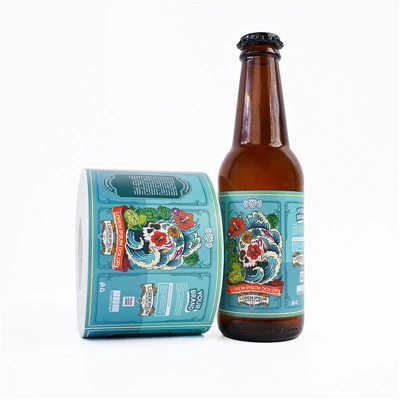
- Beverage bottles and waterproof packaging
- Outdoor equipment and signage
- Industrial equipment and warning labels
- Automotive branding and decals
- Refrigerated and frozen products
- Window graphics and vehicle wraps
Head-to-Head Comparison
1. Durability and Environmental Resistance
This is where the two materials diverge most sharply.
Paper labels are not designed for harsh conditions. They have a relatively short lifespan and can only withstand limited moisture, chemicals, abrasion, and extreme temperatures. Even with a protective laminate, paper can tear relatively easily. They are best suited for dry, indoor environments where they will not face frequent handling or exposure to the elements.
Vinyl labels, by contrast, are built to last. They are waterproof, tear-resistant, and UV-resistant. They can handle full sun exposure, rain, refrigeration, and constant handling without fading or peeling. A quality vinyl label can last 8–10 years outdoors in temperatures ranging from -40°C to 82°C.
Verdict: Vinyl wins decisively for durability and environmental resistance.
2. Moisture and Water Resistance
If your product will ever see water-whether from condensation, refrigeration, ice, rain, or spills-this difference matters enormously.
Paper labels are not waterproof. They absorb moisture, which can cause wrinkling, smudging, peeling, or complete failure. While coated papers offer some resistance, they cannot withstand prolonged exposure to moisture.
Vinyl labels are completely waterproof. They can be submerged, refrigerated, iced down, or exposed to rain without damage. This makes them the only practical choice for beverages, bath products, outdoor items, and anything stored in a fridge or freezer.
Verdict: Vinyl is the clear winner for any moisture-prone application.
3. Appearance and Aesthetic
Paper labels offer a warmth and natural texture that vinyl simply cannot match. They feel authentic, artisanal, and approachable. Textured papers like kraft or estate paper communicate craftsmanship and tradition. For wine, craft beer, handmade soaps, and organic food products, paper is often the preferred choice because it aligns with the brand's story.
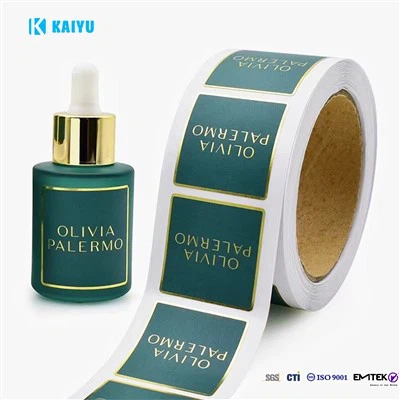
Vinyl labels offer a sleek, modern, and professional finish. They can be glossy, matte, or clear, and they maintain their appearance over time. Vinyl also supports special finishes like foil stamping and embossing. However, vinyl looks and feels like plastic-which may not suit every brand aesthetic.
Verdict: Choose paper for warmth, texture, and artisan appeal. Choose vinyl for modern, durable, or high-end aesthetics.
4. Cost
Paper labels are significantly cheaper than vinyl. For businesses printing large volumes, paper offers substantial cost savings. Paper is the economical choice when the product will not face moisture or sunlight.
Vinyl labels cost roughly 40–50% more than paper. However, the math changes when you consider lifespan. If paper labels last 3 months and vinyl lasts 3 years, vinyl is actually 12 times cheaper per month of use. For products with long shelf lives or harsh use conditions, the upfront investment in vinyl often pays for itself.
Verdict: Paper is cheaper upfront. Vinyl can be more cost-effective over the product's lifecycle.
5. Sustainability
Paper labels are biodegradable, compostable, and recyclable in standard paper streams. For brands with strong sustainability commitments, paper is often the preferred choice. Paper can also be made from FSC-certified sources.
Vinyl labels are made from PVC, a plastic that is not biodegradable and has a poor environmental profile. PVC is difficult to recycle and can release harmful chemicals during production and disposal. For eco-conscious brands, vinyl is a significant drawback.
Verdict: Paper wins decisively for sustainability.
6. Flexibility and Surface Conformity
Vinyl labels are highly flexible and can conform to curved, irregular, or textured surfaces. They wrap around bottles, tubes, and containers without wrinkling or lifting. This makes them ideal for squeeze bottles, curved cosmetic containers, and cylindrical products.
Paper labels are less flexible. They can wrinkle or crease on curved surfaces, especially if the adhesive is not perfectly matched to the application. Paper is best suited for flat or gently curved surfaces.
Verdict: Vinyl is superior for curved and irregular surfaces.
7. Adhesion
Vinyl labels use aggressive, permanent adhesives that bond to almost any surface-glass, plastic, metal, and more. The adhesive is designed to last and resist peeling, even under challenging conditions.
Paper labels offer good adhesion but may struggle on certain surfaces, especially if exposed to moisture or oils. They are best for dry, indoor applications on clean, smooth surfaces.
Verdict: Vinyl offers superior adhesion in more challenging conditions.
Frequently Asked Questions
Q1: Are vinyl labels waterproof?
Yes. Vinyl labels are completely waterproof. They can withstand full submersion, refrigeration, ice, and outdoor rain without damage. Paper labels are not waterproof and will wrinkle or fail when exposed to moisture.
Q2: Are paper labels cheaper than vinyl?
Yes, paper labels are significantly cheaper upfront. However, vinyl lasts much longer. If paper lasts 3 months and vinyl lasts 3 years, vinyl is actually 12 times cheaper per month of use. For long-term applications, vinyl can be more cost-effective.
Q3: Can paper labels be used outdoors?
Generally, no. Paper labels are not designed for outdoor use. They will fade, wrinkle, and degrade when exposed to sunlight, rain, and humidity. For outdoor applications, vinyl is the recommended choice.
Q4: Which label material is more environmentally friendly?
Paper is more environmentally friendly. It is biodegradable, compostable, and recyclable. Vinyl is made from PVC plastic, which is not biodegradable and has a poor environmental profile. For eco-conscious brands, paper is the clear winner.
Q5: How long do vinyl labels last outdoors?
High-quality vinyl labels can last 8–10 years outdoors in temperatures ranging from -40°C to 82°C. They resist fading, peeling, and degradation from sun, rain, and temperature extremes. Paper labels typically last only a few months outdoors at best.