Maintaining consistent results in screen printing across different materials and batch production requires comprehensive quality control throughout the entire process. This involves not only inspecting the finished product for quality but also preventing defects through process management, ensuring clear patterns, accurate colors, and strong adhesion to meet the stringent requirements of commercial and industrial applications.
Quality control begins with material and equipment verification. The uniformity of screen tension directly affects ink layer thickness and image reproduction. Tension values must be checked and recorded before each printing cycle to prevent ink bleeding or blurred edges due to slack. Ink viscosity, hue, and drying characteristics must match the substrate, and comparative tests should be conducted during batch changes to prevent color differences or decreased adhesion. Squeegee hardness and blade smoothness also affect pressure uniformity and should be regularly polished or replaced to maintain consistent printing pressure.
In the plate-making stage, the coating thickness of the photosensitive emulsion and exposure energy are critical control points. Too thin an emulsion can lead to incomplete mesh closure and ink leakage; too thick an emulsion reduces ink penetration and affects color saturation. Insufficient exposure time will result in incomplete curing of the emulsion in non-image areas, leaving residue on the screen after development and causing printing smudges; overexposure will cause the edges of the image to harden and shrink, resulting in a loss of detail. By printing small samples and comparing them with a standard color chart, parameters can be adjusted in a timely manner to ensure accurate printing.
Controlling the printing process hinges on the stability of the environment and parameters. Changes in temperature and humidity affect ink rheology and screen tension, and these conditions should be maintained constant in the workshop. When printing multiple colors, the positioning fixture and screen must be precisely aligned, usually using crosshairs or positioning pins to avoid cumulative errors that cause misalignment. The squeegee speed and pressure must be consistent; too fast a speed can cause water ripples or insufficient ink volume, while too slow a speed may cause ink piling or halftone bleed. First-piece inspection is essential; mass production can only begin after confirming that the color sequence, ink color, edge lines, and registration are all up to standard.
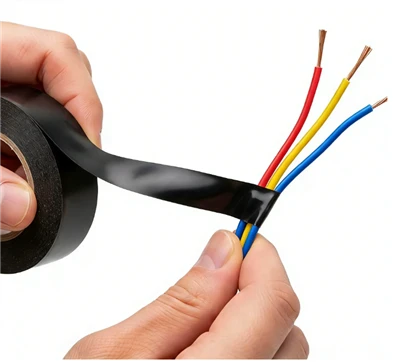
Finished product inspection covers both appearance and performance aspects. Visual inspection focuses on the presence of missed prints, spots, scratches, color differences, and uneven ink layers. Performance testing assesses adhesion, abrasion resistance, and weather resistance. For example, it uses a tape peel test to verify the bond strength between the ink and the substrate, or observes water and UV resistance in simulated environments. For special-purpose products, chemical resistance or food safety testing according to industry standards is also required to ensure the ink is harmless and compliant with regulations.
Another key aspect of quality control is record-keeping and traceability. Each batch of production should retain the screen printing plate number, ink batch number, equipment parameters, and inspection data. This allows for rapid identification of the cause and process adjustments in case of anomalies. Continuous statistical analysis helps identify potential trends, such as the tendency of certain materials to experience adhesion fluctuations under specific temperature and humidity conditions, enabling preventative measures to be taken in advance.
Overall, quality control in screen printing is a systematic undertaking that integrates material management, process parameters, environmental stability, and finished product inspection. It allows this ancient technology to continue to meet diverse needs with high reliability and consistency in modern production.