EV Wire Harness Labels: Orange Marking, UL94 VTM-0, and Temperature Selection
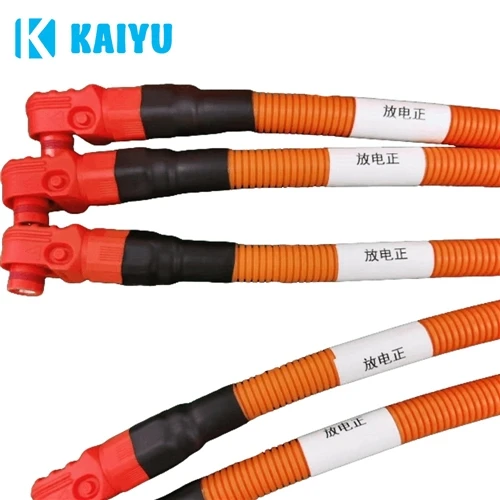
If you have ever opened the hood of an electric vehicle, you have seen them: bright orange cables running through the chassis. That orange color is not a design choice. It is a safety standard. And the labels attached to those cables must meet equally strict requirements.
EV wire harness labels face three critical demands. They must carry the correct orange high-voltage marking. They must pass UL94 VTM-0 flame retardant testing. And they must survive the extreme temperatures of an EV's operating environment. Choosing the wrong label can mean failed safety inspections, rejected production batches, or worse - a fire risk in a high-voltage system. This guide explains each requirement so you can specify the right label with confidence.
Why Orange Marking Is Required on EV High-Voltage Cables
The Global Standard
High-voltage cables in electric vehicles are universally identified by a bright orange jacket. In the United States, FMVSS 305 S4.1.2 requires that cables for high voltage sources over 30V AC or 60V DC use an outer covering with the color orange. In China, GB 18384-2020《电动汽车安全要求》mandates that high-voltage cables and harnesses be marked with orange to warn personnel of contact risk.
The reason is simple and urgent. First responders, mechanics, and technicians need to instantly recognize which cables carry lethal voltage. Orange is the universal visual warning. Tesla, Nissan, and Ford all use orange high-voltage cables in their vehicles, and their owner's manuals explicitly instruct technicians to identify them by this color.
What This Means for Labels
Your wire harness label must work with this orange marking system, not against it. Labels applied to high-voltage harnesses should either incorporate orange identification or be placed on orange-jacketed cables in a way that preserves the visual warning. Some designs use orange spiral line marks or stripe line marks running along the cable exterior, with the label printed to complement this identification.
Beyond the Cable: Warning Labels
High-voltage components also require warning labels with a yellow background and black border and arrow symbols. These are separate from the cable identification system but equally important. The label on the harness itself primarily serves traceability and identification, while warning labels alert personnel to danger.
Why Orange Marking Is Required on EV High-Voltage Cables
What Is UL94 VTM-0?
UL94 is the international standard for measuring how materials behave when exposed to flame. It is not a single test but a family of tests covering different material types. For thin, flexible materials like labels and films, the relevant test is UL94 VTM (Very Thin Material).
VTM-0 is the highest rating in this category. To earn it, a label material must pass rigorous testing: single flame combustion time under 10 seconds, total combustion time under 50 seconds across five specimens, no flaming drips that ignite cotton, and no flame spread beyond a specific marker line.
Why VTM-0, Not V-0?
This is a common point of confusion. UL94 V-0 is used for self-supporting, rigid materials. VTM-0 is specifically designed for thin, flexible films that would shrink, distort, or flex during standard vertical testing. A label material that fails the V-0 test because it curls or shrinks during flame application can still qualify for VTM-0 if it meets the VTM criteria.
For EV wire harness labels, VTM-0 is the correct certification to look for. It confirms that the label itself will not become a fire hazard inside a high-voltage system.
The Full Structure Must Pass
One label layer passing VTM-0 is not enough. The entire label construction - face material, adhesive, and any coating - must meet the standard. Avery Dennison's flame retardant platform supports "full structure" VTM-0 designs, with both the face material and adhesive engineered for flame resistance. This ensures the label does not contribute fuel to a fire, even in the most demanding conditions.
Temperature Selection: Matching the Label to Its Environment
Understanding Temperature Zones in an EV
Different parts of an electric vehicle experience very different temperatures. A wire harness label in the battery pack faces different conditions than one near the motor or under the hood.
Battery pack area: Moderate temperatures, but exposure to chemicals and potential thermal events. Labels here typically need a range of -40°C to 125°C or higher.
Under the hood: High heat from the motor and power electronics. Labels must withstand up to 150°C or more. Avery Dennison's under-hood materials are rated from -40°C to +150°C.
Chassis and exterior: Temperature swings from winter cold to summer heat, plus exposure to moisture, salt, and road chemicals.
Common Temperature Ratings for EV Labels
| Application Zone | Typical Temperature Range | Recommended Material |
|---|---|---|
| Battery pack interior | -40°C to 125°C | Flame-retardant PET or PI film |
| Under hood | -40°C to 150°C+ | High-temp PET, PI, or Tedlar® |
| Chassis / exterior | -40°C to 105°C | Durable PET with chemical-resistant adhesive |
| Extreme high-temp areas | -55°C to 225°C | PVDF or high-performance fluoropolymer |
Source: Typical industry specifications for automotive and EV label materials.
The Material Matters
The face material determines the label's temperature ceiling. Standard PET film handles up to about 125°C. Polyimide (PI) film can go much higher. Tedlar® (PVF) labels are rated from -40°C to 135°C and are used in aerospace and military applications where self-extinguishing properties are essential. For extreme conditions, PVDF labels reach up to 225°C.
The adhesive matters too. A label with a high-temperature face material but a standard adhesive will fail when the glue softens. Look for adhesives specifically rated for your application temperature and tested for adhesion to low-surface-energy substrates like the cross-linked polyethylene used on EV cables.
How to Choose the Right EV Wire Harness Label
Step 1: Confirm Your Voltage Class and Marking Requirements
Identify whether your harness carries high voltage (above 30V AC or 60V DC). If so, your label must support the orange identification system and any required warning symbols. Check FMVSS 305, GB 18384, or your local equivalent for specific marking requirements.
Step 2: Verify UL94 VTM-0 Certification
Ask your label supplier for documentation proving the entire label construction - face, adhesive, and coating - meets UL94 VTM-0. Do not accept "flame retardant" as a substitute. VTM-0 is a specific, testable standard with defined pass criteria.
Step 3: Match Temperature Rating to the Installation Zone
Determine the maximum and minimum temperatures the label will experience. Add a safety margin. A label rated exactly at your peak temperature may degrade faster than expected. Choose a material with headroom.
Step 4: Test Adhesion on Your Actual Cable
EV cables use cross-linked polyethylene (XLPE) and other low-surface-energy materials. Standard adhesives may not stick. Request samples and test them on your specific cable jacket under your actual temperature cycles.
Step 5: Consider Chemical Exposure
EV harnesses are exposed to oils, coolants, and cleaning chemicals. Choose a label with proven chemical resistance. The adhesive should maintain bond strength after immersion in automotive fluids.
FAQ
Q1: Why are EV high-voltage cables orange?
A: Orange is the universal safety color for high-voltage cables in electric vehicles, required by FMVSS 305 in the US and GB 18384 in China. It warns first responders, mechanics, and technicians of potentially lethal voltage.
Q2: What does UL94 VTM-0 mean on a wire harness label?
A: VTM-0 is the highest flame retardant rating for thin, flexible materials under the UL94 standard. It means the label self-extinguishes within 10 seconds of flame removal, does not drip flaming particles, and does not spread flame beyond a specified marker.
Q3: What is the difference between UL94 V-0 and VTM-0?
A: V-0 is for rigid, self-supporting materials. VTM-0 is for thin, flexible films that would shrink or distort during standard vertical testing. Wire harness labels use VTM-0 because they are thin films.
Q4: What temperature range do EV wire harness labels need?
A: It depends on the location. Battery pack labels typically need -40°C to 125°C. Under-hood labels need up to 150°C or more. Extreme applications may require up to 225°C.
Q5: Can a standard label be used on EV high-voltage cables?
A: No. Standard labels lack the flame retardant certification, temperature resistance, and adhesive performance needed for EV high-voltage systems. Using a non-compliant label risks safety failures and regulatory rejection.