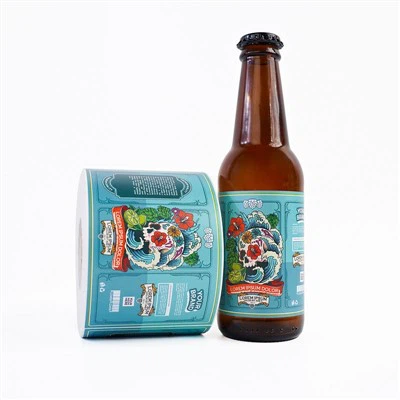
Label paper is a common information carrier in daily life and work. It takes the form of a sheet with a printable or writable surface, used to convey information such as identification, classification, and prompts. Although small in size, it plays a vital role in connecting people and goods in many fields such as offices, warehousing, retail, and logistics.
Label paper comes in a variety of materials, commonly including ordinary paper, synthetic paper, and various film substrates such as polyester and polypropylene. Ordinary paper-based labels are less expensive and suitable for indoor use at normal temperatures; synthetic paper and film substrates offer superior strength, flexibility, and weather resistance, resisting moisture, oil, and tearing, and are therefore widely used in outdoor signage or industrial settings. The choice of different materials allows label paper to meet diverse needs, from everyday organization to harsh environments.
In terms of manufacturing and usage, label paper is often used with specialized printers to display graphic and text information. Common printing methods include thermal, inkjet, and laser. The surface coating is formulated according to different printing processes to ensure that ink, toner, or thermal reactions adhere evenly and form clear and durable patterns and text. Many labels also come pre-installed with an adhesive layer, allowing them to be directly applied to various surfaces such as packaging boxes, equipment casings, and folders, eliminating the need for additional fixing steps.
The core function of labels lies in information visualization. Through concise and clear text, numbers, or barcodes, they allow users to quickly obtain key information such as the name, serial number, date, and status of an item, thereby shortening search and verification time and improving management and circulation efficiency. Simultaneously, they can also be used for decoration and warning, serving a dual purpose of reminder and aesthetics in different scenarios.
Their applications are extremely wide-ranging. In office environments, labels help quickly categorize documents, files, and materials; in warehousing and logistics, they provide clear information about goods, facilitating inventory and sorting; in retail stores, they serve as price indicators and promotional prompts; in laboratories and production workshops, they mark samples and components, reducing error rates; and in express delivery, they are the primary carriers of waybill information.
Label paper offers advantages such as low cost, ease of use, and high adaptability. However, when selecting label paper, one should consider the material of the adhesive surface, the temperature and humidity of the environment, potential chemical contact, and required durability, all based on actual needs. Appropriate material selection ensures labels remain clear and secure for a long time, preventing labels from falling off or becoming illegible and affecting work.
As a lightweight and efficient information tool, label paper is indispensable in information-based and refined management. With innovations in environmentally friendly materials and the development of intelligent printing technology, its application scope and expressive power will continue to expand, providing reliable and convenient labeling solutions for more scenarios.