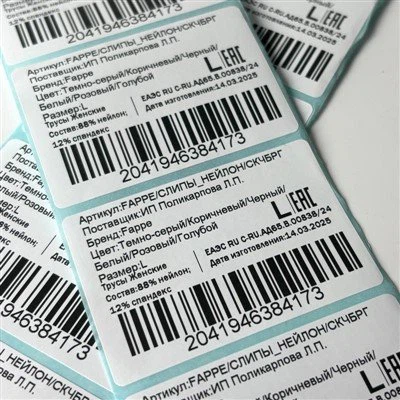
Hey there! As a supplier of UL Flame-retardant Labels, I often get asked about the resistance of these labels to UV rays. It's a crucial question, especially for those who plan to use these labels in outdoor or high-UV environments. So, let's dive right in and explore this topic.


What Are UL Flame-retardant Labels?
First off, let's briefly talk about what UL Flame-retardant Labels are. UL stands for Underwriters Laboratories, a well - known organization that tests and certifies products for safety. UL Flame-retardant Labels are designed to meet specific flame - retardancy standards set by UL. These labels are commonly used in various industries, such as electronics, automotive, and packaging, where fire safety is a top priority.
The Importance of UV Resistance
UV rays from the sun can have a significant impact on the performance and appearance of labels. When labels are exposed to UV rays over time, they can fade, crack, or lose their adhesive properties. This is a big deal, especially for UL Flame-retardant Labels, as their functionality and legibility are crucial for safety and compliance.
For example, in outdoor applications like electrical equipment or industrial machinery, labels need to remain intact and readable for a long time. If a label fades or becomes damaged due to UV exposure, it can lead to misinterpretation of safety instructions or product information, which can pose serious risks.
Are UL Flame-retardant Labels Resistant to UV Rays?
The short answer is: it depends. Not all UL Flame-retardant Labels are created equal when it comes to UV resistance. Some labels are specifically formulated to withstand UV exposure, while others may not be as resistant.
There are several factors that determine the UV resistance of UL Flame-retardant Labels:
1. Material Composition
The materials used to make the labels play a major role in their UV resistance. Labels made from high - quality, UV - stable materials are more likely to resist fading and degradation. For example, labels with a polyester or vinyl base material tend to have better UV resistance compared to paper - based labels.
2. Coating
Many UL Flame-retardant Labels come with a protective coating. This coating can act as a barrier against UV rays, preventing them from penetrating the label material. Some coatings are specifically designed to absorb or reflect UV radiation, which helps to maintain the label's appearance and performance.
3. Manufacturing Process
The way the labels are manufactured can also affect their UV resistance. Labels that are produced using advanced printing and finishing techniques are more likely to have better UV protection. For instance, labels that are printed with UV - resistant inks and then laminated with a UV - protective film are more durable in UV - exposed environments.
Testing and Certification
To ensure that UL Flame-retardant Labels are resistant to UV rays, they need to undergo rigorous testing. There are several industry - standard tests that can be used to evaluate the UV resistance of labels.
One common test is the ASTM G154 test, which exposes the labels to simulated UV light for a specific period of time. After the test, the labels are evaluated for changes in color, adhesion, and physical properties. If a label passes this test, it indicates that it has a certain level of UV resistance.
In addition to ASTM tests, some manufacturers may also conduct their own in - house testing to ensure the quality and performance of their labels. This can include long - term outdoor exposure tests, where labels are placed in real - world conditions for an extended period of time to observe their performance.
Real - World Applications
Let's take a look at some real - world applications where UV - resistant UL Flame-retardant Labels are essential:
1. Outdoor Electrical Equipment
Electrical equipment installed outdoors, such as transformers, switchgear, and solar panels, requires labels that can withstand UV exposure. These labels need to provide important safety information, such as voltage ratings, warning signs, and maintenance instructions. UV - resistant UL Flame-retardant Labels ensure that this information remains visible and legible over time.
2. Automotive Industry
In the automotive industry, labels are used on various components, both inside and outside the vehicle. Outdoor - exposed labels, such as those on the exterior of cars or trucks, need to be UV - resistant to maintain their appearance and functionality. UL Flame-retardant Labels are also important for safety reasons, especially in areas where there is a risk of fire.
3. Packaging Industry
The packaging industry often uses labels for product identification, branding, and safety information. Labels on products that are stored or transported outdoors need to be UV - resistant to prevent fading and damage. UL Flame-retardant Labels can be used on packaging for flammable or hazardous materials to ensure compliance with safety regulations.
Our Offerings
As a supplier of UL Flame-retardant Labels, we offer a wide range of labels with different levels of UV resistance. Our Tags And Labels Printing service allows you to customize labels according to your specific requirements. Whether you need labels for outdoor use or indoor applications, we can provide you with high - quality, UV - resistant labels.
We also offer PCB High-temperature Labels that are not only flame - retardant but also resistant to high temperatures and UV rays. These labels are ideal for use in the electronics industry, where they need to withstand harsh environments.
In addition, our Qr Packaging Labels are designed to be UV - resistant, ensuring that the QR codes remain scannable and the label information remains intact.
Contact Us for Purchase
If you're interested in purchasing UL Flame-retardant Labels with excellent UV resistance, don't hesitate to get in touch. We're here to help you find the right labels for your needs. Whether you have a small - scale project or a large - scale production requirement, we can provide you with the best solutions.
References
- ASTM International. (2016). Standard Practice for Operating Fluorescent Light Apparatus for UV Exposure of Non - metallic Materials (ASTM G154).
- Underwriters Laboratories. (2020). UL Standards for Safety.