Removable Labels vs Permanent Labels: What's the Right Choice?
When you order custom labels for your products, you probably spend most of your time thinking about design, shape, and material. But there is one decision that can make or break your customer experience-and it is often overlooked until it is too late: the adhesive.
The choice between removable labels and permanent labels is not just about how sticky they are. It is about what happens when someone tries to take the label off. Will it come off cleanly, leaving the container pristine? Or will it fight back, leaving behind a sticky mess that frustrates your customers?
This guide breaks down everything you need to know about removable labels vs permanent labels-what they are, how they perform, and exactly which one is right for your product.
What Are Permanent Labels?
Permanent labels are exactly what they sound like: labels designed to stay put. Once applied, they bond firmly to the surface and are not meant to be removed. Removing a permanent label usually requires soaking, scraping, or some other method of persuasion-and even then, it often leaves residue behind or damages the surface.
Permanent adhesives create a strong, long-lasting bond with nearly any surface. They are the most common type of label adhesive because they work for most applications and tend to be the most budget-friendly.
Key Properties of Permanent Labels
- Strong, durable bond: Designed to stay in place for the life of the product
- Resistant to environmental factors: Withstand moisture, heat, and chemicals
- Tamper-evident: Removal is difficult and often leaves visible damage
- Cost-effective: Generally less expensive than removable alternatives
- Wide surface compatibility: Works on flat, curved, textured, and irregular surfaces
- Long lifespan: Built to last-resists moisture, UV, abrasion, and harsh environments
Common Uses for Permanent Labels
- Product branding labels
- Shipping labels
- Asset tracking and equipment labels
- Warning and safety labels
- Compliance and regulatory labels
- Outdoor labels exposed to sun, moisture, and extreme temperatures
- Food and beverage packaging exposed to refrigeration
What Are Removable Labels?
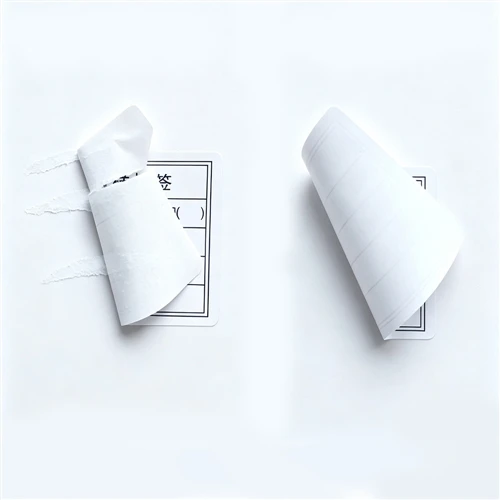
Removable labels are designed to be peeled off cleanly-without leaving sticky residue behind and without damaging the surface they were applied to. They are perfect for situations where the label is only needed temporarily.
Removable adhesives use a less aggressive formulation that provides holding power without long-term commitment. That said, removable labels tend to bond more strongly the longer they are left in place, so they may not come off as easily after sitting on a shelf for a long time.
Key Properties of Removable Labels
- Clean removal: Peels off without leaving residue or damaging surfaces
- Temporary use: Ideal for short-term applications
- Reusable packaging friendly: Perfect for containers that customers will reuse
- Durability: Typically lasts up to 6 months; ideal for short-term use
- Surface compatibility: Works best on smooth, clean surfaces like glass, plastic, and metal
- Slightly more expensive: More complex to produce than permanent labels
Common Uses for Removable Labels
- Price tags and retail promotions
- Temporary product information
- Reusable or returnable containers
- Seasonal or limited-time promotions
- Coupons and promotional stickers
- Inventory rotation labels
- Window decals and temporary signage
Head-to-Head Comparison
1. Adhesive Strength and Bond
Permanent labels use aggressive adhesives designed to stay stuck long-term. Once applied, they form a strong bond that is difficult to break. Removing them usually damages the label or leaves residue behind. Permanent adhesives are the go-to choice when you need your label to stay on for the life of the product.
Removable labels use lighter adhesives that provide enough tack to stay in place during normal use but peel off cleanly when needed. They are designed for applications where the label will eventually need to come off without causing damage.
Verdict: Choose permanent for long-term bonding; choose removable for temporary needs.
2. Removal and Residue
Permanent labels are difficult to remove and often leave sticky residue or damage the surface. If you have ever struggled to scrape old sticker residue off a glass jar, you know exactly what this feels like.
Removable labels peel off cleanly, leaving minimal to no residue behind. They come off in one piece and do not damage the application surface.
Verdict: Removable wins for clean, frustration-free removal.
3. Durability and Lifespan
Permanent labels are built to last. They resist moisture, UV exposure, abrasion, and harsh environments. They are designed to survive shipping, storage, refrigeration, and frequent handling.
Removable labels are designed for short-term use, typically lasting up to 6 months. They may not hold up as well in extreme conditions like humidity, heat, or rough handling.
Verdict: Permanent offers superior long-term durability.
4. Temperature and Environmental Resistance
Permanent labels withstand a wide range of temperatures and environmental conditions. They can handle refrigeration, freezing, outdoor exposure, and contact with cleaning products. Permanent plastic labels can resist temperatures down to -40°C.
Removable labels have more limited environmental resistance. Removable plastic labels typically only resist temperatures down to -10°C-and freezer temperatures are usually around -18°C. They may also struggle in humid or wet conditions.
Verdict: Permanent is the clear winner for extreme temperatures and harsh environments.
5. Cost
Permanent labels are generally more budget-friendly. Because they are simpler to produce, they cost less per label.
Removable labels are slightly more expensive due to the more complex adhesive formulations required.
Verdict: Permanent is more cost-effective; removable commands a slight premium.
6. Customer Experience
Permanent labels are great when you want your branding to stay visible throughout the product's lifecycle. However, if your packaging is reusable-like glass jars, food delivery containers, or returnable bottles-permanent labels can frustrate customers who struggle to remove them.
Removable labels enhance customer experience on reusable packaging. Customers can easily peel off the label and reuse the container without dealing with sticky residue.
Verdict: Removable wins for reusable packaging and positive customer experience.
Frequently Asked Questions
Q1: Can removable labels become permanent over time?
Yes. Removable labels tend to bond more strongly the longer they are left in place. A label that is easily removable when first applied may become much harder to remove after sitting on a shelf for months or years. If you need guaranteed clean removal, do not leave removable labels on for extended periods.
Q2: Are removable labels more expensive than permanent labels?
Yes. Removable labels are slightly more expensive because they require more complex adhesive formulations. However, the extra cost is often worth it for applications where clean removal is essential.
Q3: Can removable labels withstand freezing temperatures?
It depends on the specific product. Removable plastic labels typically resist temperatures down to -10°C-but freezer temperatures are usually around -18°C. For frozen products, permanent plastic labels are the better choice as they resist down to -40°C.
Q4: What is the difference between removable and repositionable labels?
Removable labels are designed to come off cleanly and are not meant to be reapplied. Repositionable labels are designed to be removed and reapplied multiple times, often used when you need to adjust the label's position during application. Repositionable adhesives have a different formulation that allows for temporary repositioning before the bond becomes permanent.
Q5: How do I know which adhesive is right for my product?
Consider four key factors:
Product type: Will your product be refrigerated, frozen, or exposed to moisture?
Packaging material: Will the label be applied to glass, plastic, metal, or textured surfaces?
Label lifespan: Does the label need to stay on for the life of the product, or only temporarily?
Customer experience: Will customers want to remove the label and reuse the packaging?