When selecting flame retardant labels, choosing a safe and reliable solution is about more than just meeting basic fire safety requirements. It is about ensuring that critical information-such as serial numbers, barcodes, safety warnings, and compliance markings-remains legible and durable under extreme conditions, including high heat, chemical exposure, and direct flame contact.
This guide is designed to help you navigate the selection process with confidence. By understanding key safety certifications, material properties, environmental compliance standards, and supplier verification practices, you can make an informed decision that protects both people and property.
Why Standard Labels Fail Where Flame Retardant Labels Succeed
Standard labeling materials are not designed to withstand thermal events. When exposed to fire or intense heat, ordinary labels can ignite, produce toxic smoke, melt, or simply become illegible. This failure can have serious consequences in applications where traceability and safety information are mission-critical-think lithium-ion battery packs, aerospace wiring harnesses, automotive engine compartments, or industrial control panels.
Flame retardant labels, by contrast, are purpose-built to resist ignition, inhibit flame spread, and maintain legibility even after thermal exposure. They are engineered using specialized films and adhesive systems that self-extinguish within seconds and prevent flaming drips from spreading fire to surrounding components. A product labeled "flame retardant" without any standard reference is essentially unverifiable; independent certification provides a common benchmark that buyers and regulators can rely on.
Understanding Safety Certifications: UL 94 and Beyond
-
What the UL 94 Flammability Rating Means
The most widely recognized standard for evaluating the flammability of plastic and synthetic materials is UL 94, published by Underwriters Laboratories. This standard classifies materials based on their behavior during and after exposure to an open flame. For flame retardant labels, UL 94 VTM-0 (Vertical Thin Material) and V-0 are the most critical classifications.
A UL 94 V-0 rating requires that the material self-extinguishes within 10 seconds after the flame is removed and produces no flaming drips that could ignite cotton beneath the test specimen. This level of performance is essential for labels used inside electronic devices, battery modules, and other confined spaces where even a small flaming droplet could cause a secondary fire.
-
UL 969: The Label-Specific Standard
Beyond material flammability, UL 969 is the standard that specifically addresses the testing and evaluation of labels and identification systems. While UL 94 focuses on the material's inherent flammability, UL 969 examines the complete label construction-including facestock, adhesive, and printing-under real-world conditions such as temperature cycling, humidity exposure, chemical resistance, and UV durability. When sourcing flame retardant labels, look for products that carry both UL 94 VTM-0 (or V-0) certification and UL 969 recognition to ensure comprehensive safety and performance.
-
Industry-Specific Standards
Different industries enforce their own fire safety requirements. For automotive applications, FMVSS 302 (Federal Motor Vehicle Safety Standard No. 302) governs the flammability of interior materials, and flame retardant labels used in vehicles must pass this burn test. For aerospace, standards such as BSS 7238 (smoke density) and BSS 7239 (toxicity) are often required in addition to flame resistance. For electronic equipment, IEC 60332 standards apply to cables and connectors, demanding that flame propagation be limited even in bundled configurations.
When evaluating a label, always ask the supplier which specific standards the product has been tested against and whether third-party test reports are available.
Material Selection: Matching Performance to Environment
The material substrate of a flame retardant label determines its temperature tolerance, chemical resistance, and durability. The most common options fall into three categories.
-
Polyimide (PI)
Polyimide offers exceptional high-temperature performance, with operational limits reaching 260°C (500°F). It withstands short-term thermal peaks associated with electronics assembly processes such as wave soldering and reflow. Polyimide labels are also known for low smoke and low toxicity characteristics under combustion. This makes them the preferred choice for demanding applications including printed circuit board tracking, battery pack identification, aerospace wiring, and high-voltage component labeling.
-
Flame Retardant Polyester (FR PET)
FR PET provides a more economical solution while still meeting UL 94 VTM-0 flame ratings. It typically operates up to 150°C (302°F) and is easier to print using standard thermal transfer or laser printing equipment. Polyester labels resist stretching and tearing, offer dimensional stability, and are suitable for wire harnesses, appliance panels, enclosure identification, and general industrial equipment. FR PET is an excellent choice when budget constraints exist but flame retardancy cannot be compromised.
-
Other Material Options
Depending on the application, other substrates may be appropriate. Vinyl cloth offers flexibility and removability for temporary marking applications, though its temperature range is narrower. Tedlar® (polyvinyl fluoride) provides self-extinguishing properties and is ideal for labeling high-temperature areas, meeting FMVSS 302 for automotive use. Polycarbonate films with VTM-0 ratings are also available for applications requiring transparency and flame resistance.
-
A Practical Rule
Use polyimide for extreme heat peaks and long-term high-temperature exposure. Use FR PET for general-purpose flame-retardant needs where cost effectiveness is a priority.
Halogen-Free and Environmental Compliance
Flame retardant labels are subject to increasingly stringent environmental regulations. Traditional halogenated flame retardants, while effective, can release corrosive and toxic gases when burned, posing risks to human health and the environment. Halogen-free alternatives, typically based on phosphorus, nitrogen, or mineral compounds, achieve fire safety without producing harmful byproducts.
Regulatory requirements that affect flame retardant label selection include:
RoHS and REACH: The European Union's RoHS Directive restricts halogenated flame retardants in electrical and electronic equipment. REACH imposes risk-based assessments and encourages innovation in non-halogenated technologies.
Halogen-free thresholds: For a material to qualify as halogen-free, chlorine and bromine concentrations must not exceed 900 ppm individually, with a combined total below 1,500 ppm, in alignment with IEC 61249-2-21.
When selecting labels, specify halogen-free constructions if your products will be sold in regulated markets. Request material data sheets and compliance documentation to verify that the label meets these thresholds.
Adhesive Technology: Ensuring Long-Term Reliability
Flame resistance alone is insufficient if the adhesive fails under heat, chemicals, or mechanical stress. FR acrylic pressure-sensitive adhesives are formulated specifically for harsh environments, providing bonding to metals, challenging plastics, low-surface-energy materials, and powder-coated finishes.
Key adhesive considerations include:
Temperature resistance: Ensure the adhesive's service temperature range matches your application's thermal profile. Some adhesives withstand continuous exposure from -40°C to 150°C or higher.
Chemical resistance: Adhesives in flame retardant labels should resist oils, coolants, cleaning agents, and solvents commonly encountered in industrial environments.
Aggressiveness: For textured or high-energy surfaces, specify products with aggressive FR adhesives that maintain bond strength under vibration and thermal cycling.
Gap-filling properties: For irregular or curved surfaces, high-conformability adhesives with gap-filling capabilities provide more reliable long-term bonding.
Always test the label on actual production surfaces before full deployment to verify adhesion, print durability, and flame performance.
How to Identify Truly Safe Flame Retardant Labels
The flame retardant market contains products that make unsubstantiated claims. Protect yourself by following a systematic verification process.
Step One: Verify Certifications
A legitimate flame retardant label will clearly indicate the standards it meets. Look for references to UL 94 VTM-0 or V-0, UL 969, and industry-specific standards such as FMVSS 302 or BSS 7238. A label that says "flame retardant" without citing a specific standard is legally meaningless. Request the supplier's UL file number and verify the certification through UL's online certification directory whenever possible.
Step Two: Examine the Supplier's Documentation
Reputable suppliers provide comprehensive technical data sheets that include:
Material composition and halogen-free declarations
UL 94 classification and test report references
Adhesive performance specifications (temperature range, peel strength, shear resistance)
Chemical resistance profiles
Printing compatibility and ribbon recommendations
Suppliers should also be able to provide REACH and RoHS compliance declarations upon request.
Step Three: Request Sample Testing
Before placing bulk orders, obtain production-representative samples and validate them under your actual operating conditions. Test the labels for:
Print legibility and barcode scan reliability after thermal cycling
Adhesive bond strength after exposure to intended chemicals and temperatures
Flame performance using a recognized test method (with appropriate safety precautions)
Step Four: Check for Fake Certificates
Counterfeit UL labels and fraudulent certification marks exist in the marketplace. To identify fake certificates, perform a three-step forensic audit: check the certification number format, verify the issuing body's credentials, and confirm that the notified body number corresponds to an accredited laboratory in official databases such as NANDO for CE certifications. Do not rely solely on supplier logos or printed marks without independent verification.
Step Five: Evaluate Supplier Longevity and Transparency
Long-standing manufacturers with established brands and transparent business practices are less likely to supply non-compliant materials. Ask about the supplier's quality management system (ISO 9001 certification is a positive indicator), in-house testing capabilities, and willingness to provide traceable documentation for each production batch.
Common Applications Requiring Flame Retardant Labels
Understanding the application environment guides material and certification choices.
Electronics and PCB Assembly: Labels must survive wave soldering, reflow ovens, and cleaning chemistries while meeting UL 94 VTM-0 standards. Polyimide labels are the established solution.
Lithium-Ion Battery Packs: Batteries require labels that not only resist flames but also prevent flaming drips-a key reason UL 94 VTM-0 with no-drip performance is specified.
Automotive Engine Compartments and Interiors: Under-hood environments demand resistance to oil, vibration, and temperatures up to 150°C or higher. FMVSS 302 compliance is often mandatory.
Aerospace and Avionics: Labels must meet multiple standards including UL 94, low-smoke, low-toxicity requirements (BSS 7238/7239), and FAA approval for specific applications.
Industrial Equipment and Control Panels: Labels must resist cleaning agents, abrasion, and thermal cycling while maintaining legibility for safety warnings and equipment identification.
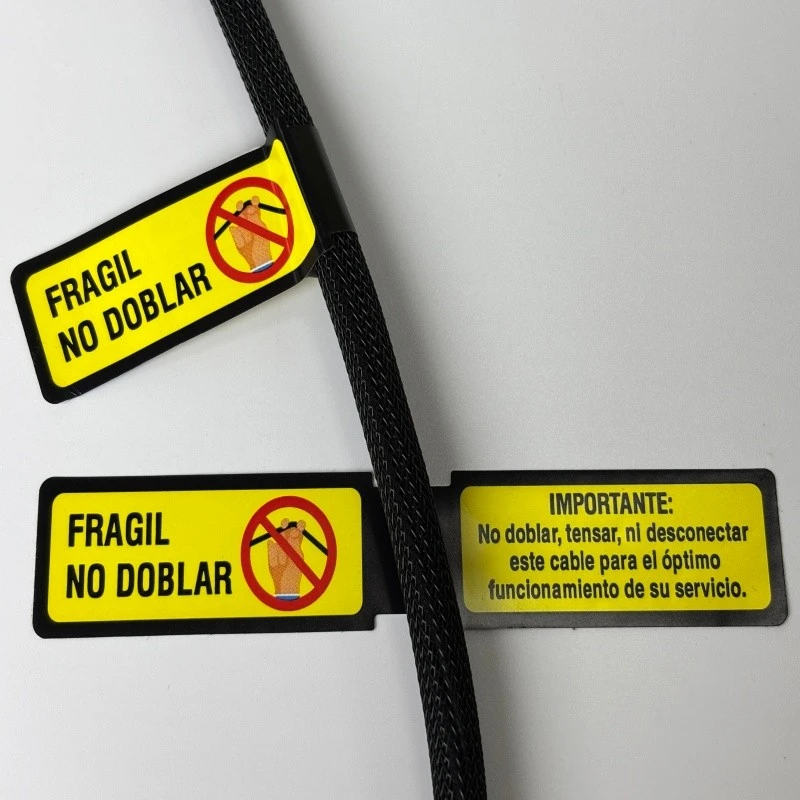
Wire and Cable Identification: Self-laminating wrap-around labels and flag labels made from flame retardant polyester operate in confined cable trays and control cabinets, where flame propagation must be contained.
What Makes Flame Retardant Labels Different from Standard Labels
Unlike ordinary marking solutions, flame rated label constructions actively resist ignition and inhibit flame spread. This difference is critical in any situation where component-level fire containment is required. Standard labels melt or ignite; flame retardant labels self-extinguish.
Putting It All Together: A Selection Checklist
When evaluating flame retardant labels for your application, use the following checklist:
Safety certification: Does the label carry UL 94 VTM-0 or V-0 rating? Is UL 969 recognition also confirmed?
Material suitability: Is polyimide required for high-temperature exposure (up to 260°C) or will FR PET suffice (up to 150°C)?
Environmental compliance: Is the label halogen-free? Does it meet RoHS and REACH requirements for your target markets?
Adhesive performance: Is the adhesive matched to your surface (metal, plastic, powder-coated, low-surface-energy) and thermal environment?
Printing compatibility: Will the label accept thermal transfer or laser printing with appropriate ribbons for durable barcode retention?
Industry-specific requirements: Does the application require FMVSS 302, BSS 7238/7239, or other industry standards in addition to UL 94?
Supplier verification: Can the supplier provide third-party test reports, UL file numbers, and all compliance declarations?
Sample validation: Have you tested the labels under your actual operating conditions before ordering full production quantities?
Making the Final Decision
Choosing safe and reliable flame retardant labels requires balancing fire safety performance, material durability, environmental compliance, and application-specific requirements. The lowest-priced option is rarely the correct choice when product safety and regulatory compliance are on the line. Likewise, the most highly certified product may be unnecessary for applications with moderate thermal demands.
The safest approach is to work with a reputable supplier who understands your industry, can provide full certification documentation, and will support testing on actual production substrates. Properly selected flame retardant labels do more than just meet minimum standards-they provide an essential layer of passive fire protection that safeguards equipment, facilities, and human lives.
FAQ
Q1: What is the difference between UL 94 V-0 and UL 94 VTM-0 for labels?
UL 94 V-0 applies to standard solid plastic specimens, while UL 94 VTM-0 is the version for thin materials (films and flexible substrates), which is the relevant rating for most pressure-sensitive labels. Both require self-extinguishment within 10 seconds with no flaming drips that ignite cotton.
Q2: How do I verify if a flame retardant label is genuinely certified?
Request the supplier's UL file number and look up the certification on UL's official online certification directory. Legitimate UL Marks are traceable to specific file numbers and product categories. Also confirm that printed labels reference the actual standard they meet (e.g., "UL 94 VTM-0"), not just generic "flame retardant" wording.
Q3: Do flame retardant labels require special printing equipment or ribbons?
Most flame retardant labels are optimized for thermal transfer printing for highest durability and chemical resistance. Use resin ribbons validated for the specific facestock to ensure scratch resistance, solvent resistance, and long-term barcode readability. Some products also support laser or flexographic printing.
Q4: What should I do if my application requires low smoke and low toxicity in addition to flame retardancy?
Specify labels that have been tested to BSS 7238 (smoke density) and BSS 7239 (toxicity) standards, in addition to UL 94 VTM-0. Polyimide labels generally produce less smoke and fewer toxic gases than PET alternatives under combustion.
Q5: Where do flame retardant labels typically fail in service?
The most common failure modes are adhesive degradation under sustained high temperatures leading to label lifting, and print fading or smearing due to chemical exposure or incompatible print ribbons. Both issues can be avoided through proper material selection and supplier validation