Introduction: Why the Wrong Waterproof Label Fails Faster Than You Think
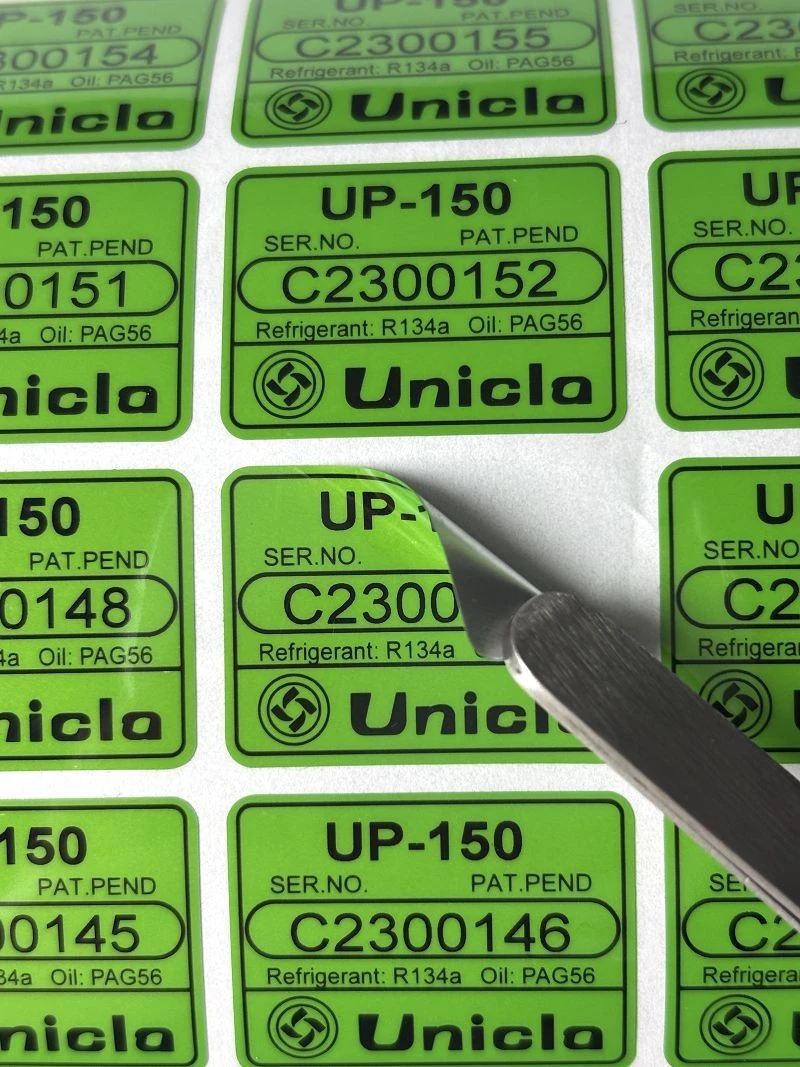
You need a label that survives moisture, refrigeration, or outdoor weather. But the first time it peels, smears, or turns brittle, you realize: not all waterproof materials are equal.
Walk into any label supply store or search online, and you will encounter three main options: PP (polypropylene), PE (polyethylene), and synthetic paper. Each claims to be waterproof. Yet each behaves very differently under real-world conditions like freezing temperatures, oil exposure, or repeated handling.
This guide helps you move past marketing claims. By the end, you will know exactly which material matches your product, printer, and environment.
The Core Question – What Does "Waterproof" Actually Mean for a Label?
Waterproof does not mean indestructible. In the label industry, a waterproof label resists water absorption and maintains adhesive strength when wet. However, other factors matter just as much: chemical resistance, flexibility, temperature tolerance, and printability.
Before comparing PP, PE, and synthetic paper, understand your specific needs. Are you labeling a shampoo bottle that sits in a wet shower? A frozen food package that moves from freezer to counter? Or an industrial chemical container that faces spills?
Your application changes the best answer completely.
PP (Polypropylene) Labels – The All-Rounder for Smooth Surfaces
- What Is PP Label Material?
Polypropylene (PP) is a semi-rigid, glossy, or matte synthetic film. It resists water, oil, and moderate tearing. Most PP labels come with a permanent acrylic adhesive.
- Key Strengths of PP for Waterproof Labeling
High moisture resistance: PP does not absorb water. It survives splashes, rain, and condensation.
Oil and chemical resistance: Excellent for kitchen, cosmetic, and automotive products.
Print quality: Sharp graphics and barcode clarity, especially with thermal transfer or UV inkjet.
Temperature range: Typically -20°C to +80°C (-4°F to +176°F).
- Where PP Falls Short
Low flexibility: PP is stiffer than PE. It struggles with curved, squeezable surfaces like soft lotion tubes.
Poor conformability: The label may lift at the edges on irregular or textured surfaces.
Recycling challenges: Harder to recycle than PE in some regions.
Best for: Rigid plastic bottles (shampoo, detergent), jars, jars with smooth sides, and products exposed to oil or humidity but not extreme squeezing.
PE (Polyethylene) Labels – The Flexible Choice for Squeezable Containers
- What Is PE Label Material?
Polyethylene (PE) is a softer, more pliable film. It feels almost paper-like in some finishes but remains waterproof. PE is chemically similar to many plastic bottles, which improves recyclability.
- Why Choose PE for Waterproof Applications
Superior flexibility: PE conforms to curved, squeezable, or soft surfaces without lifting.
Excellent cold tolerance: Performs well in refrigeration and freezing (down to -40°C/-40°F with the right adhesive).
Good water resistance: Like PP, PE repels water effectively.
Better recyclability: When paired with PE containers, the label can often be recycled together with the bottle.
- Limitations of PE Labels
Lower heat resistance: PE softens above +60°C (+140°F). Not suitable for hot-fill or high-heat environments.
Less rigid handling: In automatic applicators, softer PE can jam more easily than PP.
Moderate oil resistance: Weaker than PP against cooking oils or greasy surfaces.
Best for: Squeezable bottles (ketchup, lotion, hand soap), flexible packaging, frozen goods, and cold-storage applications.
Synthetic Paper – The Hybrid Option for Writing and Extreme Durability
- What Is Synthetic Paper?
Synthetic paper is not actually paper. It is a polypropylene-based material with a chalky, textured coating. That coating lets it accept pencil, pen, or marker like real paper-while remaining completely waterproof and tear-resistant.
- Unique Advantages of Synthetic Paper
Writeable surface: Unlike PP or PE, you can hand-write on synthetic paper without smearing.
Extreme tear resistance: Almost impossible to rip by hand.
UV and weather stability: Excellent for long-term outdoor use (2–5 years).
Printer compatibility: Works with laser, inkjet (with coating), and thermal transfer printers.
- Where Synthetic Paper Disappoints
Higher cost: Typically 20–50% more expensive than PP or PE.
Stiffer feel: Less flexible than PE; not ideal for severe curves.
Adhesion variation: Some backings require special adhesives for low-surface-energy plastics.
Best for: Outdoor equipment labels, chemical drums, maps, shipping tags, and any label that needs handwritten updates (e.g., date codes or batch numbers).
Head-to-Head Comparison – PP vs. PE vs. Synthetic Paper
| Property | PP (Polypropylene) | PE (Polyethylene) | Synthetic Paper |
|---|---|---|---|
| Water resistance | Excellent | Excellent | Excellent |
| Flexibility | Moderate | High | Low to moderate |
| Squeezable surfaces | No | Yes | No |
| Writeable surface | No | No | Yes |
| Heat resistance | Good (80°C/176°F) | Low (60°C/140°F) | Good (80°C/176°F) |
| Cold tolerance | Good (-20°C) | Excellent (-40°C) | Good (-20°C) |
| Oil/chemical resistance | Very good | Moderate | Good |
| Tear resistance | High | High | Very high |
| Cost | Low to medium | Low to medium | High |
| Typical use | Rigid bottles, jars | Squeezable tubes, frozen food | Outdoor tags, industrial |
How to Choose the Right Waterproof Label – A Simple Decision Flow
Follow these five questions to make your choice.
Question 1 – Is the container squeezable or highly curved?
Yes → Choose PE
No → Go to Question 2
Question 2 – Do you need to hand-write on the label?
Yes → Choose Synthetic Paper
No → Go to Question 3
Question 3 – Will the label face oil, grease, or high heat?
Yes → Choose PP
No → Go to Question 4
Question 4 – Is the product stored in a freezer (-20°C or below)?
Yes → Choose PE
No → PP is likely your most cost-effective choice
Real-World Application Examples
Example A – Organic lotion in a squeezable tube
The tube is flexible and used in a bathroom.
Best match: PE (flexibility + moisture resistance)
Example B – Engine oil bottle (rigid plastic)
The bottle is stiff, and oil spills happen.
Best match: PP (oil resistance + rigid surface compatibility)
Example C – Outdoor electrical junction box label
Needs UV resistance, no handheld writing, and 3-year outdoor life.
Best match: PP or Synthetic Paper (PP for cost; synthetic paper for extra tear strength)
Example D – Reusable cold chain shipping tag with batch number
Needs freezer tolerance, waterproofing, and handwritten date codes.
Best match: Synthetic Paper (writeable + cold-tolerant)
Printing Considerations – What Works With Your Printer?
Your printer type limits your options more than you expect.
Direct thermal: Not recommended for long-term waterproof use. Heat and light darken the paper. Choose thermal transfer instead.
Thermal transfer (ribbon): Works with all three materials. Use a resin or wax-resin ribbon for PP and synthetic paper; resin for PE.
Laser printer: Synthetic paper only (and only laser-compatible synthetic paper). PP and PE can melt inside a laser printer.
Inkjet (standard): Not recommended without special coating. Use synthetic paper with inkjet coating or switch to thermal transfer.
Always request print samples before committing to a full roll.
Conclusion – Match the Material to the Movement
No single waterproof label material wins every job.
Choose PP for stiff, smooth, or oily surfaces where cost and print sharpness matter most.
Choose PE for anything squeezable, flexible, or freezer-bound.
Choose Synthetic Paper when you need to write by hand, plus extreme tear and weather resistance.
Test a small sample batch on your actual container. Simulate shipping, storage, and use. The extra 15 minutes of testing saves weeks of relabeling later.
If you still feel unsure, start with PP on rigid bottles. For soft packaging, start with PE. And for industrial or outdoor handwritten tags, synthetic paper is worth the premium.
CFrequently Asked Questions (FAQ)
1. Can PP or PE labels be used on glass jars in a refrigerator?
Yes, both work well on glass in refrigerated conditions. PE offers better flexibility if the jar has curved shoulders, but PP is fine for straight-walled jars. Ensure the adhesive is rated for cold and condensation.
2. Is synthetic paper actually recyclable with regular paper?
No. Despite the name, synthetic paper is a plastic film. It must be recycled with plastics, not with paper. Check local recycling guidelines-many facilities cannot process it.
3. Which material is best for labels that get wet and then frozen (e.g., meat packaging)?
PE is the strongest choice here. It remains flexible at freezing temperatures and handles moisture well. PP may become brittle below -20°C (-4°F) and crack.
4. Do I need a special printer ribbon for waterproof PP labels?
Yes. Use a resin thermal transfer ribbon for the best waterproof, smudge-proof image on PP. Wax-resin works for indoor dry use only. Avoid wax-only ribbons.
5. Why does my waterproof label still fail after washing a bottle?
The label material may be fine, but the adhesive likely failed. Check three things: adhesive type (permanent vs. removable), surface energy (low-energy plastics like PE need aggressive adhesives), and cure time (some adhesives need 24 hours to reach full bond strength).