Custom Labels for Cosmetic Jars and Beauty Products: A Complete Buyer's Guide

Before a customer ever tries your cream or serum, they see your jar-and they touch the label. That first sensory impression can make your product feel premium or ordinary. Custom labels do more than identify contents: they tell your brand story, protect against moisture and oils, and keep you legally compliant. This guide covers material selection, adhesives, finishes, compliance, sustainability, and smart ordering-so you can choose labels that elevate your beauty products.
Why Cosmetic Jar Labels Matter
A label is your silent salesperson. It lives on the shelf, in the bathroom, and in the customer's hand long after purchase. In a crowded beauty market, labels must grab attention and stay beautiful through daily use. Bathrooms are humid, hands are oily, and products get tossed into bags. A label that peels or fades erodes trust quickly. The right label stays crisp from first use to last, reinforcing your brand and protecting critical information like ingredients and expiration dates.
Choose the Right Label Material
Material is the foundation of label performance.
Paper Labels – Warm and tactile, paper works for dry-use products, gift packaging, or vintage aesthetics. It pairs well with foil stamping and embossing. However, standard paper stains, warps, and disintegrates with oils or moisture. Only use paper if you add a protective varnish or laminate, and only for low‑exposure situations.
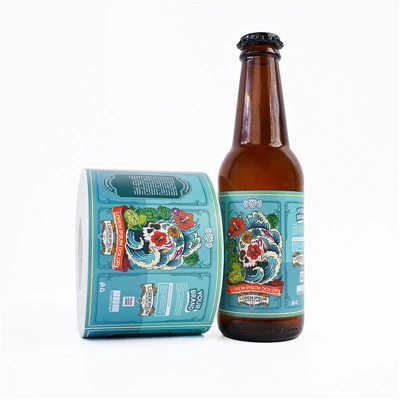
Film Labels – For most cosmetics, film is the safer choice. BOPP (biaxially‑oriented polypropylene) is the industry standard: thin, durable, waterproof, and oil‑resistant. It comes in white, clear, and metallic finishes. Polyester (PET) adds heat and chemical resistance; vinyl offers extreme flexibility for squeezable jars. These films hold up to condensation and frequent handling without wrinkling.
| Your Product Environment | Recommended Material |
|---|---|
| Oil‑based formulas (balms, facial oils) | Film (BOPP/PET/vinyl) |
| Bathroom humidity / wet hands | Film with laminate |
| "Natural" look, low moisture | Paper with matte varnish |
| Very small jars with dense text | Film or paper with matte laminate for readability |
Select the Right Adhesive
A beautiful label won't help if it peels off. Consider:
- Surface type – Glass, plastic, and coated surfaces need different adhesive formulations.
- Environmental exposure – Humidity, refrigeration, and frequent handling all affect adhesion.
- Permanent vs. removable – Do you want the label to stay on, or come off cleanly for reusable jars?
- Curved surfaces – The adhesive must conform without bubbling.
For oil‑heavy products, use adhesives rated for "greasy surfaces." These maintain their bond despite contact with skin oils or product leakage.
Choose a Finish That Matches Your Brand
Finish turns a good label into a memorable one.
- Matte – Non‑reflective, sophisticated, and ideal for luxury or organic brands. Reduces glare, making small ingredient text easier to read. Feels soft to the touch.
- Gloss – Makes colors pop and grabs attention. Great for bold, energetic products like bath gels or lip balms. But glare can reduce readability of fine print.
- Soft‑touch – Velvety, suede‑like texture that screams premium. Increasingly popular in clean beauty.
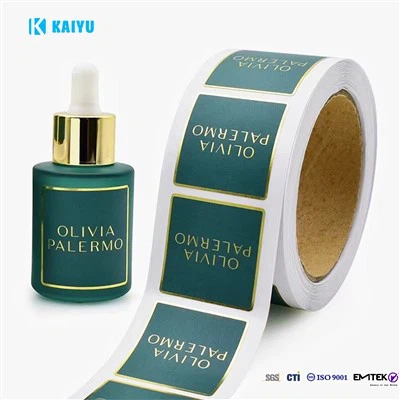
- Metallic / Foil – Gold or silver accents on a dark jar say "premium" instantly. Use sparingly on logos or key brand elements for an elevated look.
- Embossing / Debossing – Adds tactile depth to logos, making the label feel refined and craftsman‑like.
Design for Clarity and Compliance
Your label must be both beautiful and legally sound.
All information must be "prominently and conspicuously" readable under normal purchase conditions. For products without outer packaging, the jar itself must carry everything.
Readability tips – Ingredient lists often require tiny type (6pt or smaller). High‑resolution digital printing keeps fine print crisp. Establish a visual hierarchy: brand name first, then product type, key claims, and finally compliance details. Avoid clutter-ensure regulatory text isn't lost in decoration.
Consider Sustainability
Sustainability is becoming a baseline expectation. Brands that demonstrate genuine commitment gain an edge.
Sustainable material options:
- Recycled paper – reduces virgin fibre use; suits natural aesthetics.
- Biobased films – made from renewable raw materials (e.g., tall oil from wood processing).
- Biodegradable materials – break down in composting conditions.
- Recyclable films – compatible with standard recycling streams.
Demand for alternative materials is surging, leading to "clean, elegant, and understated designs" that signal environmental responsibility. However, avoid vague claims like "eco‑friendly" without third‑party certifications. Work with suppliers who can substantiate their credentials.
Order Smart – Samples, Proofs, and Quantities
Never commit to a large run without testing.
- Request physical samples – Digital proofs are not enough. Feel the material, check colour accuracy, and test adhesion on your actual jars.
- Test in real conditions – Apply labels to filled jars and expose them to humidity, oil, and handling for a few days.
- Start small – Many printers offer low minimum order quantities (MOQs). Use a small batch to validate your design before scaling.
- Measure your jar shape – For wrap‑around labels, leave a slight gap. Custom die‑cutting ensures a perfect fit and minimises wrinkling.
Frequently Asked Questions
1. What is the best label material for cosmetic jars that contain oils?
BOPP film is the industry standard. It is waterproof, oil‑resistant, and tear‑proof, and it won't stain or dissolve. Pair it with a "greasy surface" adhesive for best results.
2. Are paper labels ever suitable for cosmetic products?
Yes, but only for dry products not exposed to water or oils-e.g., powders, products stored away from sinks. They need a varnish or laminate and must be tested under actual use.
3. What information is legally required on U.S. cosmetic labels?
The product name (statement of identity), net quantity, ingredient list in descending order, manufacturer/distributor name and address, and any mandatory warnings. These are required by the FD&C Act and FPLA.
4. How do I know if I need waterproof or just water‑resistant labels?
Water‑resistant handles light splashes and refrigeration. Waterproof handles full submersion, ice, and outdoor conditions. For bathroom‑stored skincare, waterproof BOPP or vinyl is recommended. If the product is used in the shower, waterproof is non‑negotiable.
5. Can I order custom cosmetic labels in small quantities?
Yes. Many printers now offer low MOQs for startups and product testing. Digital printing makes short runs economical and accessible.